
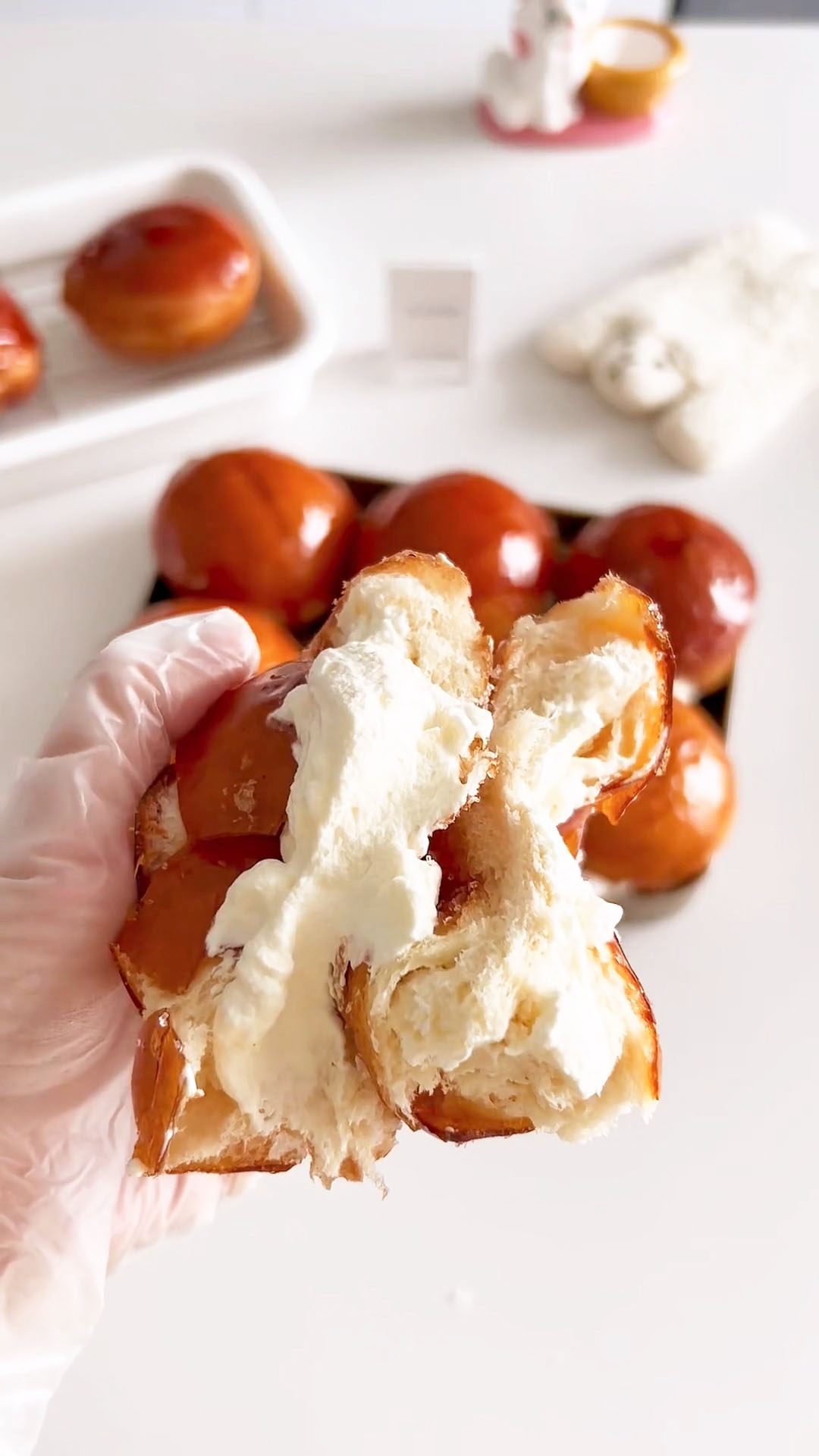
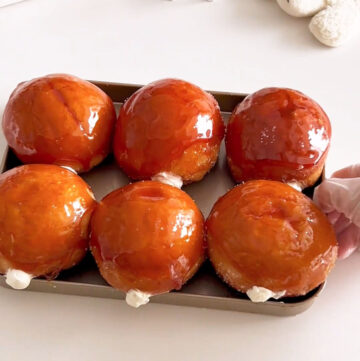
These exploding caramel donuts are crispy on the outside, soft and fluffy inside, and filled with rich whipped cream. Each donut is dipped in a glossy caramel shell that cracks when you bite into it. A stunning homemade dessert that looks impressive but is easier than you think.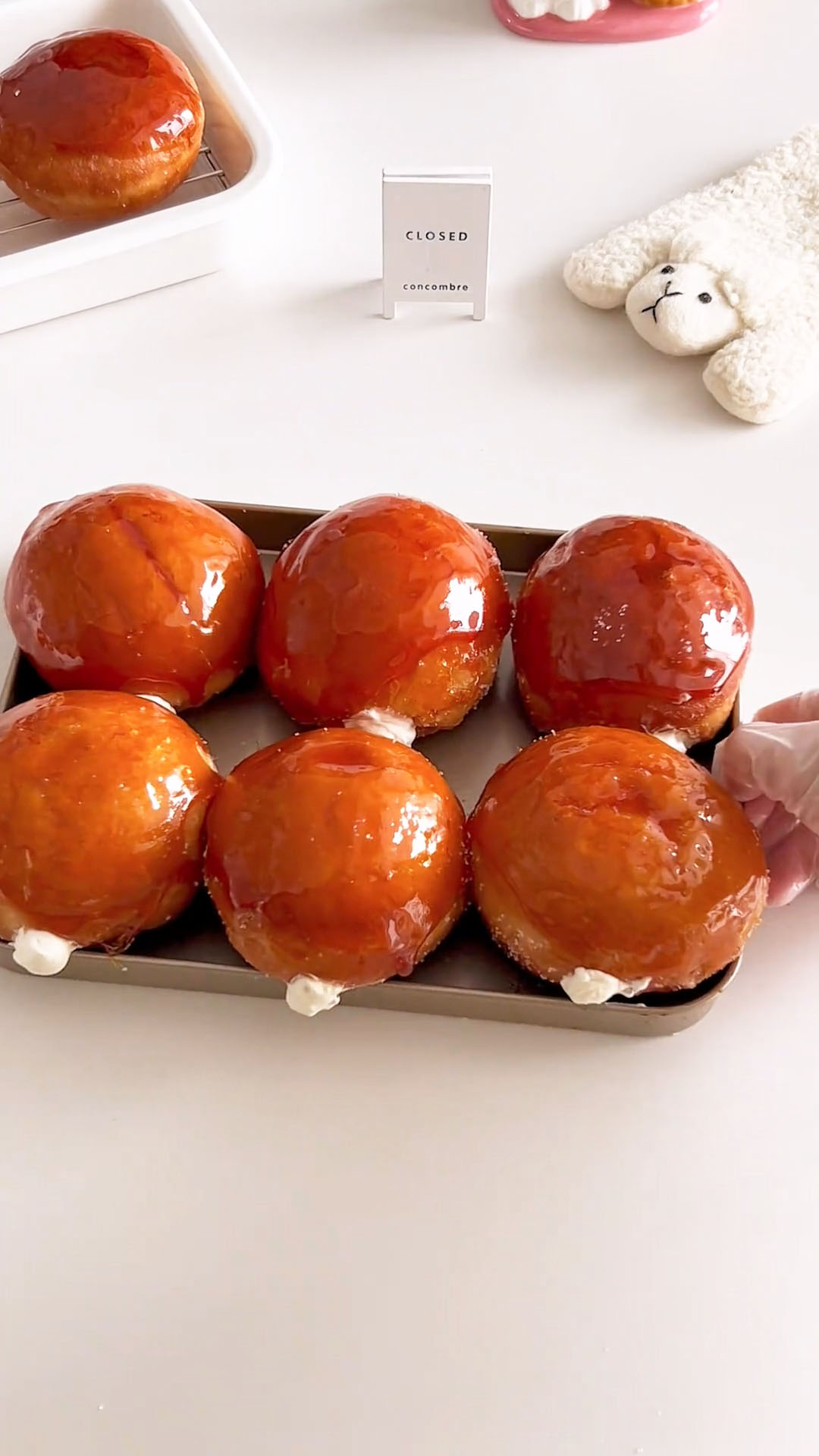
I’ll admit, this recipe does involve a few steps, but it’s far less intimidating than it looks at first glance — especially if you have a stand mixer or a good electric mixer to do most of the work for you. Once you get into the rhythm, each step flows naturally into the next, and nothing feels rushed or complicated.
Trust me on this one. To make things even easier, I’ve prepared a short video and added clear, step-by-step photos for every key stage. You can literally cook along with the visuals, which makes the whole process much more approachable, even if you’re not used to working with caramel.
When it comes to the caramel, the technique is very similar to making tanghulu.
I follow the same rule every time and it has never failed me — a strict 2:1 sugar-to-water ratio. This ratio helps the sugar melt evenly, prevents burning, and gives you a smooth, glossy caramel that sets beautifully.
As long as you’re patient and resist the urge to stir, you’ll be rewarded with a clean, crisp caramel that makes these donuts truly special.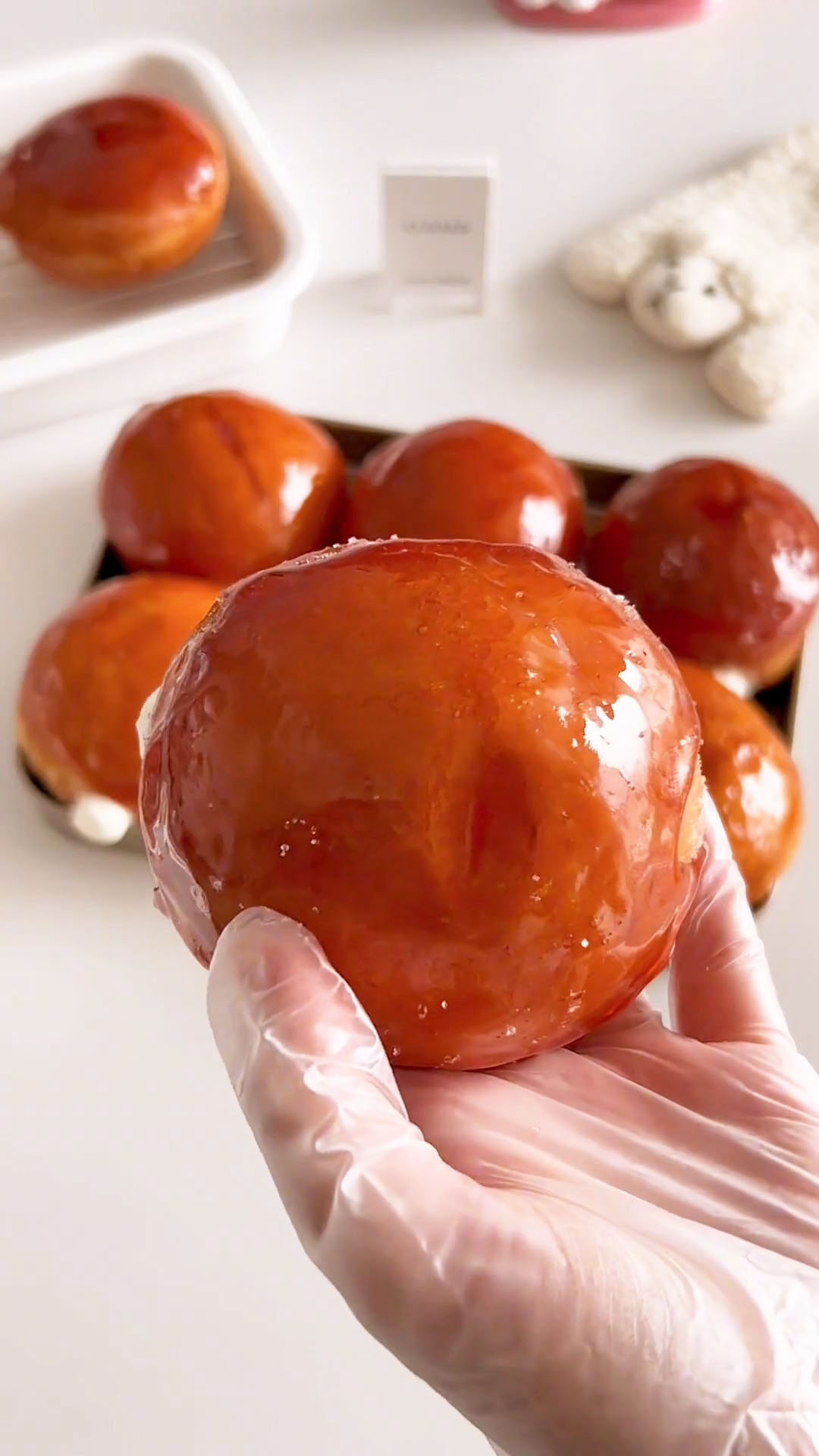
Why you’ll love this recipe
- An Unforgettable Textural Symphony: You get the brittle crack of the caramel layer, the soft and tender crumb of the perfect donut, and the smooth, cool cream filling—all in one glorious bite.
- Deep, Toasty Caramel Flavor: Unlike a simple sugar glaze, the homemade caramel brittle coating adds a sophisticated, toasty-sweet flavor that perfectly balances the sweetness of the donut and cream.
- The Joy of Making It Yourself: There’s something special about mastering the steps—from kneading the dough to the magic of watching sugar turn into caramel. The result tastes so much better than anything store-bought.
- Perfect for Sharing: These donuts are beautiful and impressive, making them ideal for a weekend baking project, a special brunch, or a gift that shows you care.
Ingredients
Title: Ingredients and Substitutions
- Bread Flour – The high protein content is essential for developing a strong gluten network, which gives the donuts their chewy yet light and airy structure. Do not substitute with all-purpose or cake flour.
- Whole Egg – Using the entire egg at room temperature adds richness, tenderness, and a beautiful golden color to the dough.
- Milk – Hydrates the dough and contributes to a soft texture and subtle richness. Whole milk is best for flavor, but any milk will work.
- Granulated Sugar – Sweetens the dough and, crucially, feeds the yeast for a good rise. You can slightly reduce the amount if you prefer a less sweet base.
- Salt – A must for balancing all the sweetness and enhancing the overall flavor of the dough.
- High-Sugar-Tolerant Yeast – This is key. Regular active dry yeast can struggle in the sweet dough environment, but this specialized yeast is designed to work perfectly, ensuring your donuts rise properly.
- Unsalted Butter, softened – Enriches the dough, making it more tender and giving it a wonderful flavor. Ensure it’s softened to room temperature so it incorporates smoothly.
- Fine Granulated Sugar (for Caramel) – Using fine sugar helps it melt evenly and smoothly without clumping when making the caramel brittle coating.
- Water (for Caramel) – Combined with sugar to create the syrup that will cook into the caramel. The ratio is important for the right consistency.
- Granulated Sugar (for Coating) – A simple roll in sugar right after frying adds a delightful initial crunch and extra sweetness.
- Whipping Cream – For the luscious, “bursting” filling inside. Use full-fat, well-chilled whipping or heavy cream for the best stability and flavor.
Ingredients for Recipe
For the Donut Dough
- 350 g bread flour
- 50 g whole egg, room temperature
- 180 g milk
- 50 g granulated sugar
- 3 g salt
- 4 g high-sugar-tolerant yeast (instant)
- 40 g unsalted butter, softened
For Frying & Coating
- Neutral oil (for frying, such as canola or vegetable)
- Granulated sugar, as needed for coating
For the Caramel Brittle
- 200 g fine granulated sugar
- 100 g water
For the Filling
- Whipping cream, as needed (chilled)
How to Make Exploding Caramel Donuts
Knead the dough and first proof
In the bowl of a stand mixer fitted with a dough hook, combine the bread flour, sugar, egg, milk, and high-sugar-tolerant yeast, and salt.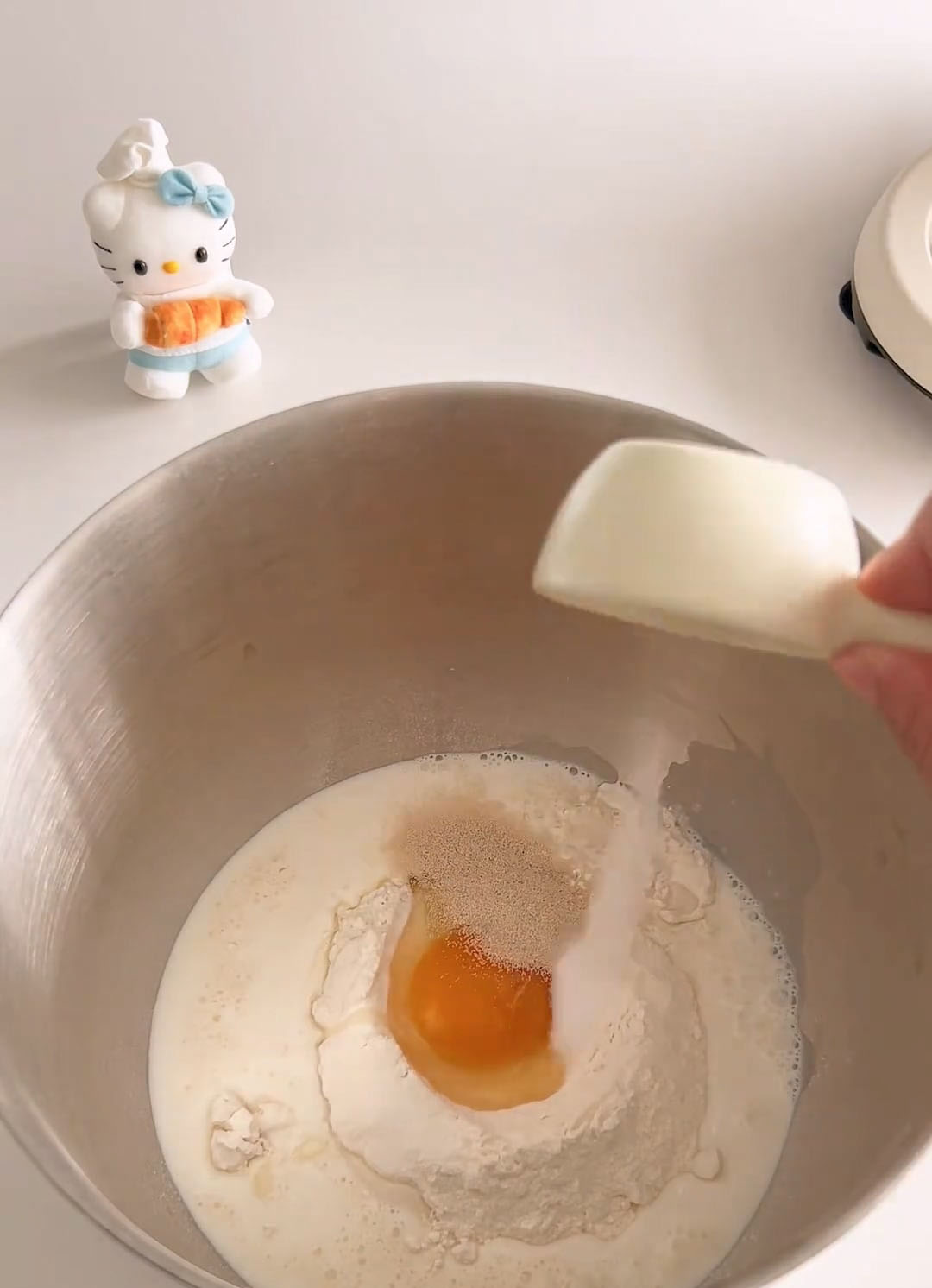
Mix on low speed until just combined and no dry flour remains, about 2-3 minutes. Increase the speed to medium-high and knead for 5-7 minutes, until the dough is cohesive and pulls away from the sides of the bowl, forming a rough gluten network (it should tear easily when stretched).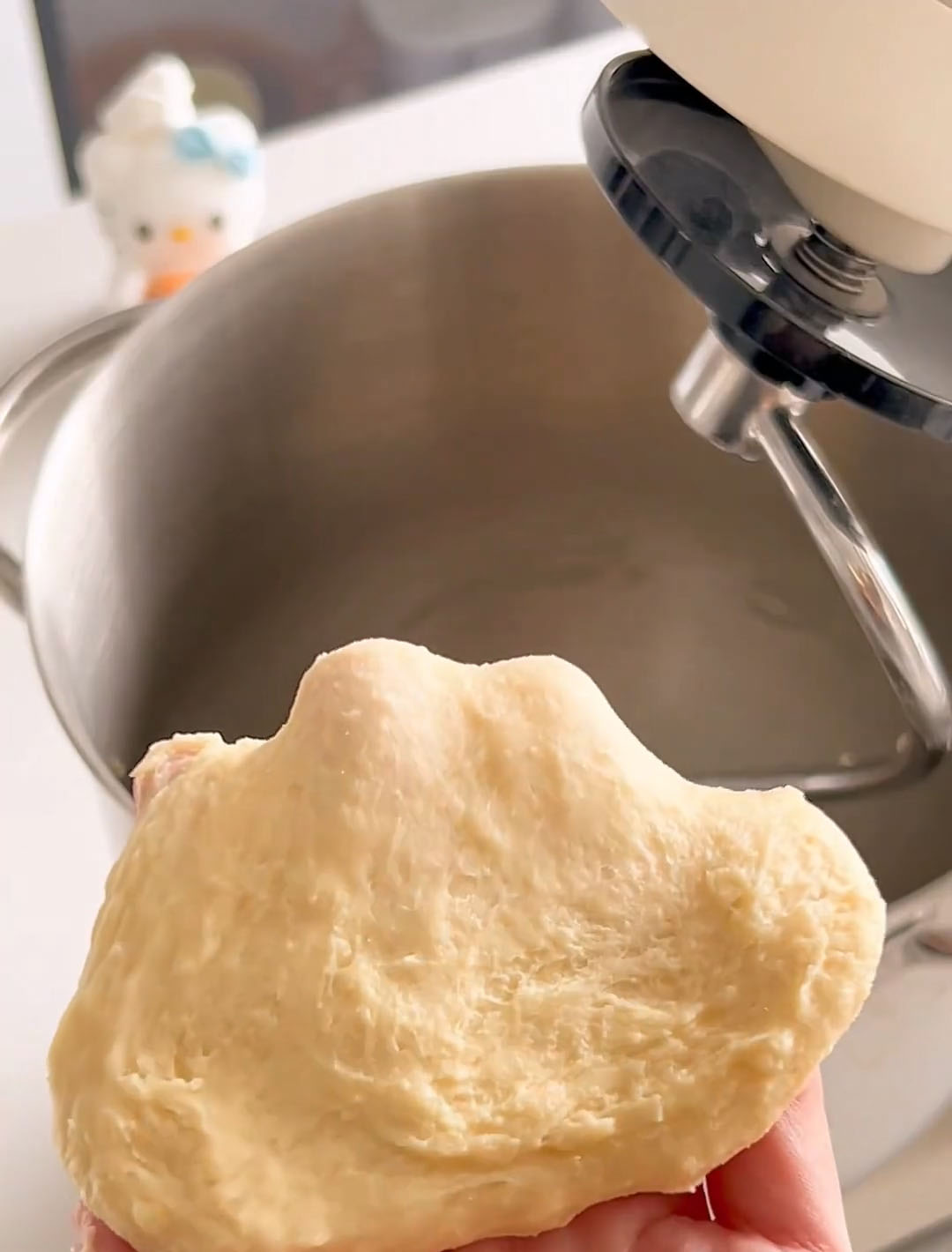
Add the softened butter and mix on low speed until the butter is fully absorbed into the dough.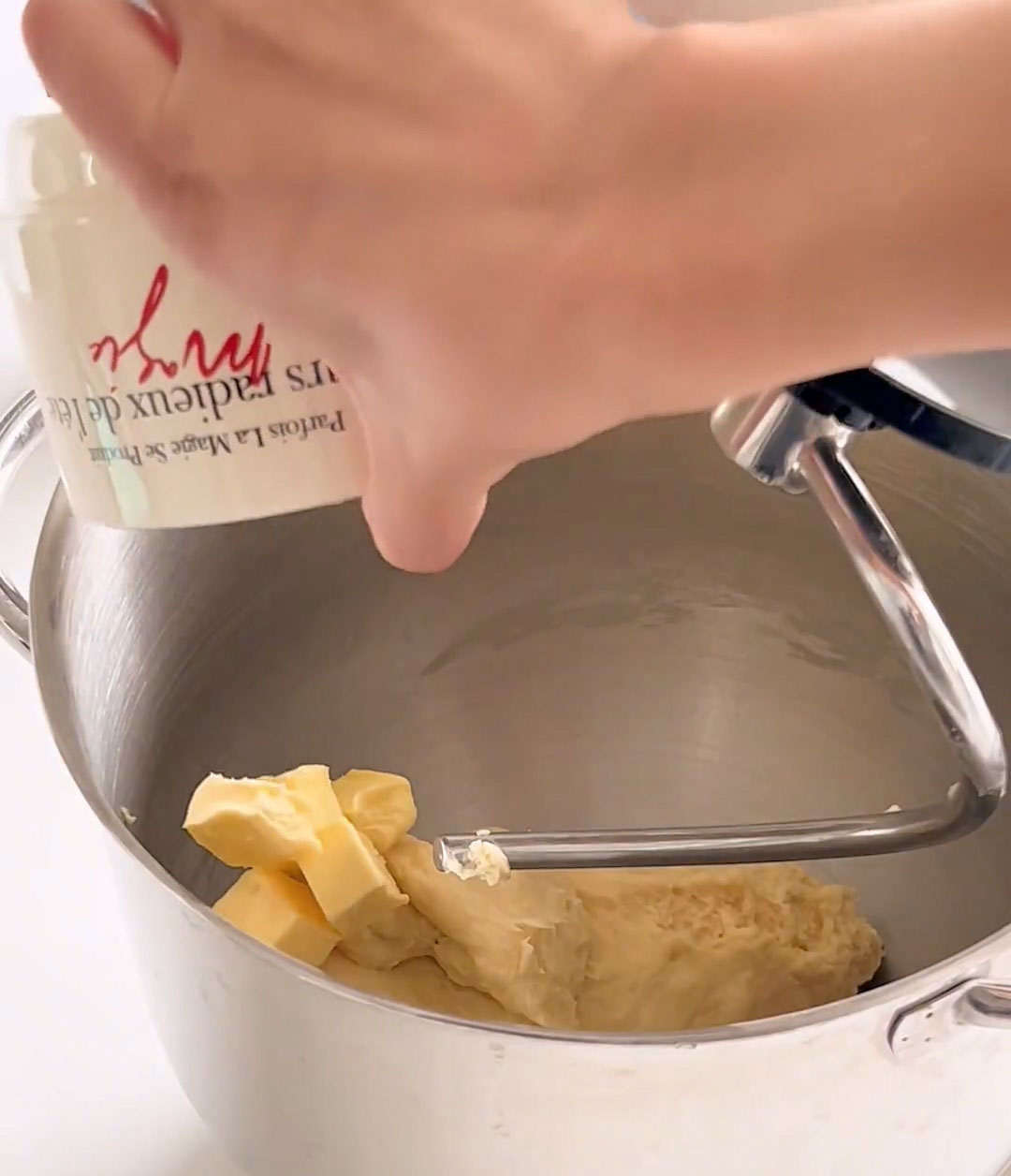
Then, increase the speed to medium-high and knead for another 8-10 minutes, until the dough is very smooth, elastic, and passes the windowpane test (you can stretch a small piece thinly into a translucent membrane without it tearing).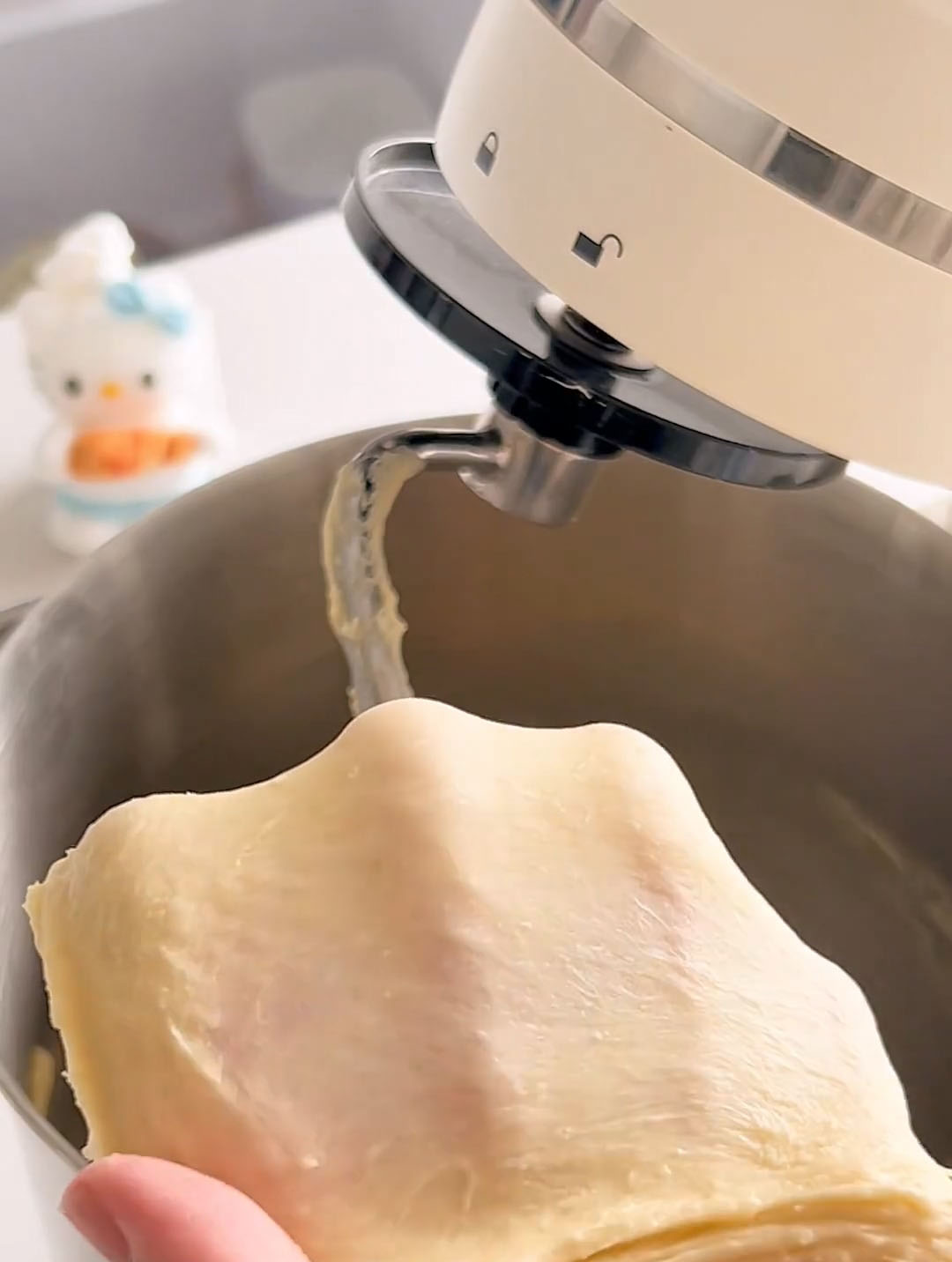
Shape the dough into a ball, place it in a container, and proof at 28°C for about 50 minutes, until doubled in size. When pressed with a finger, the indentation should not spring back or collapse.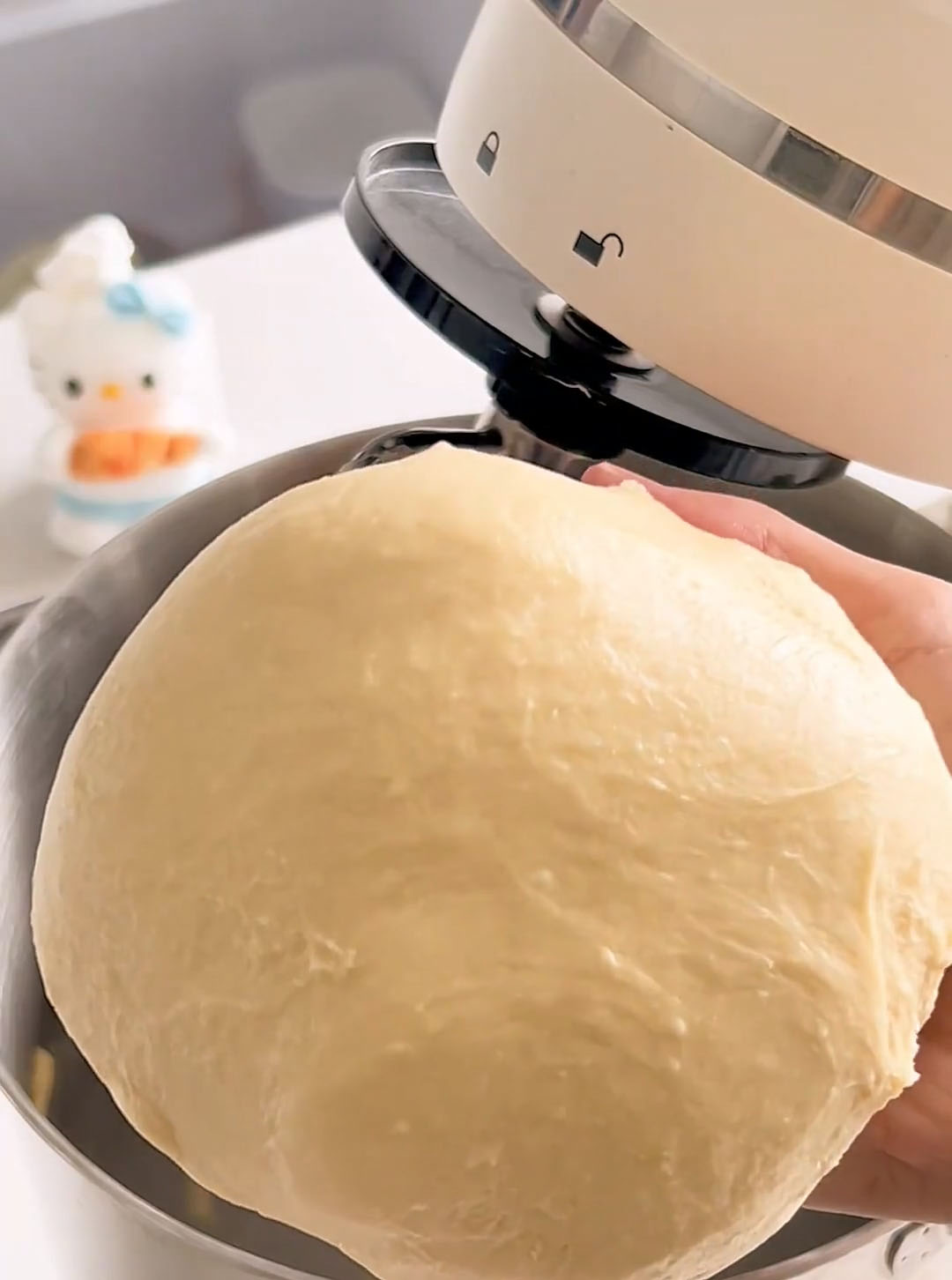
Divide, rest, and second proof
Remove the dough and gently press to release excess air.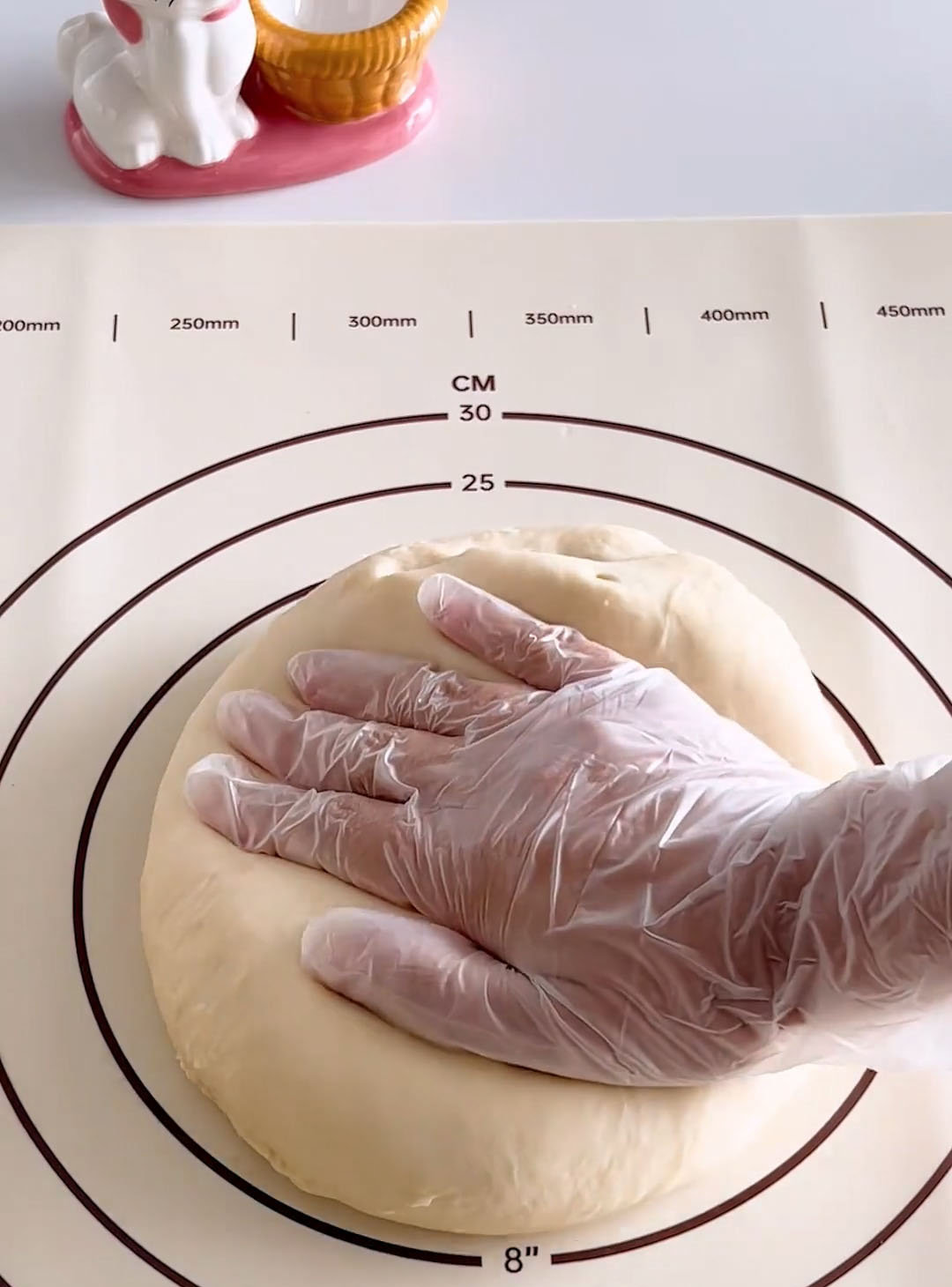
Divide into 55 g portions and shape each into a smooth ball.
Cover and let the dough rest for 15 minutes to prevent shrinking during shaping.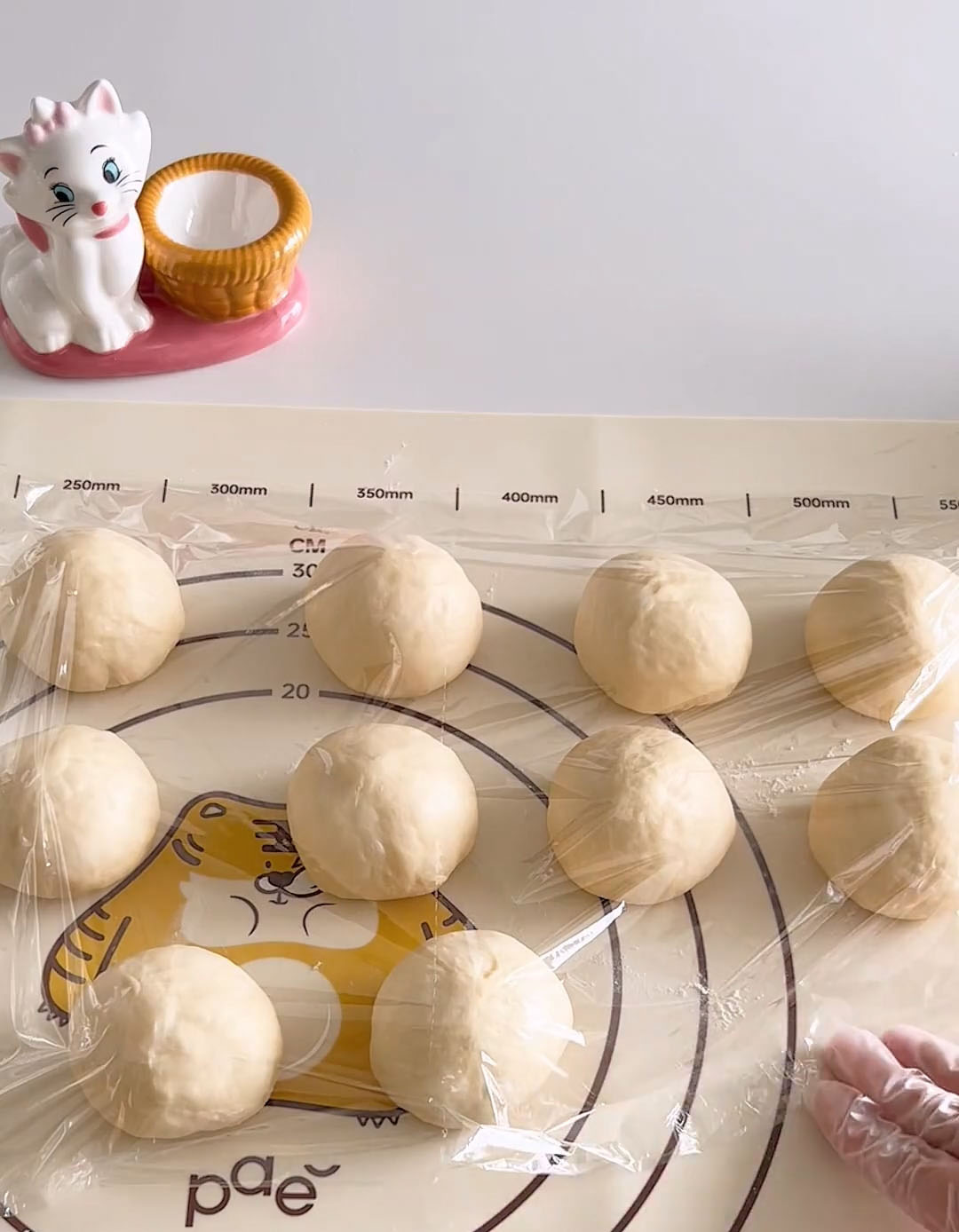
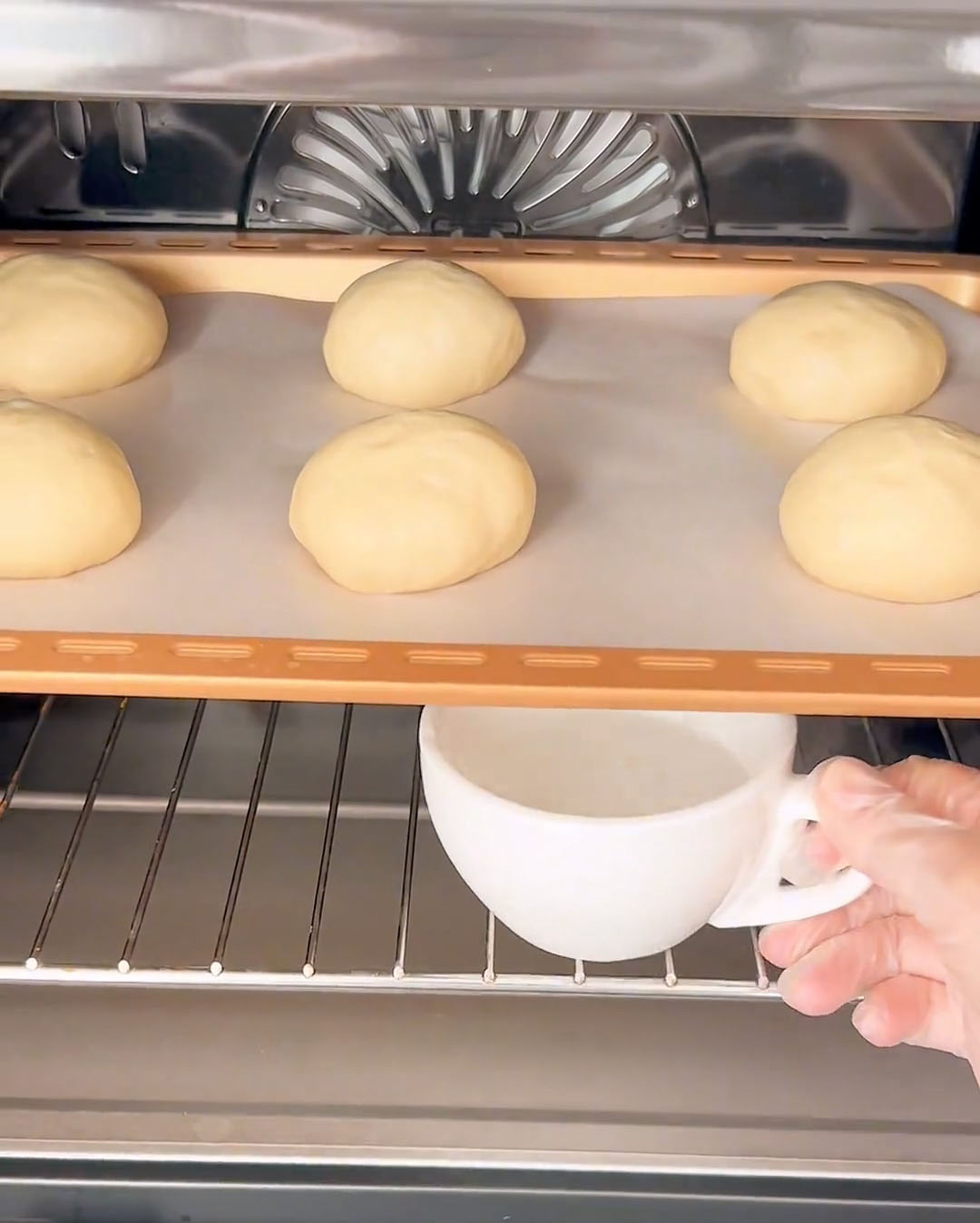
Place the dough balls onto a tray and gently flatten them. Put a bowl of hot water in the oven, set the temperature to 35°C, and proof for 40 minutes, until the dough is light, puffy, and airy.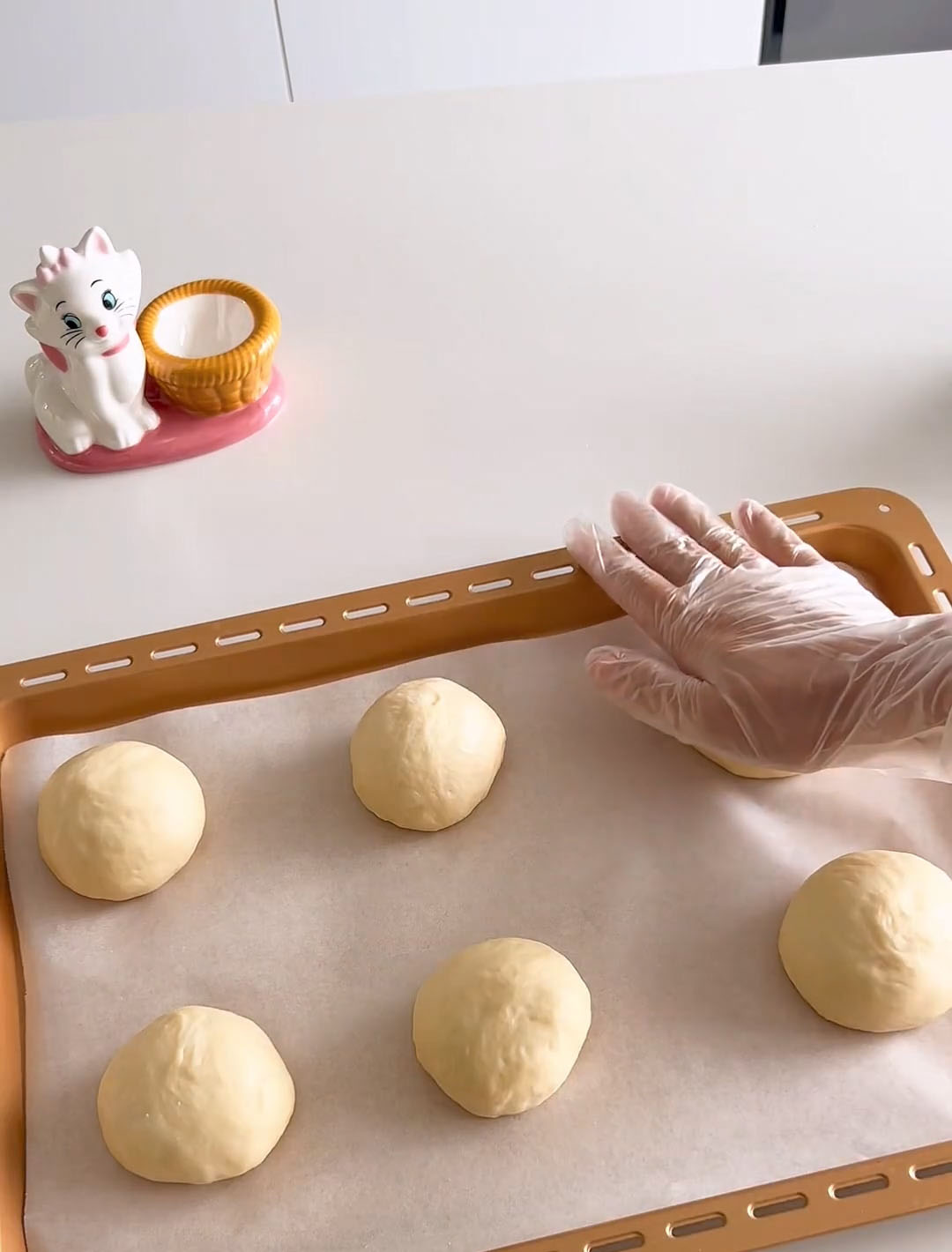
Fry and coat with sugar
Heat oil to 160–170°C. When chopsticks inserted into the oil produce steady, dense bubbles, the oil is ready.
Fry the donuts until golden on both sides, flipping once for even colouring.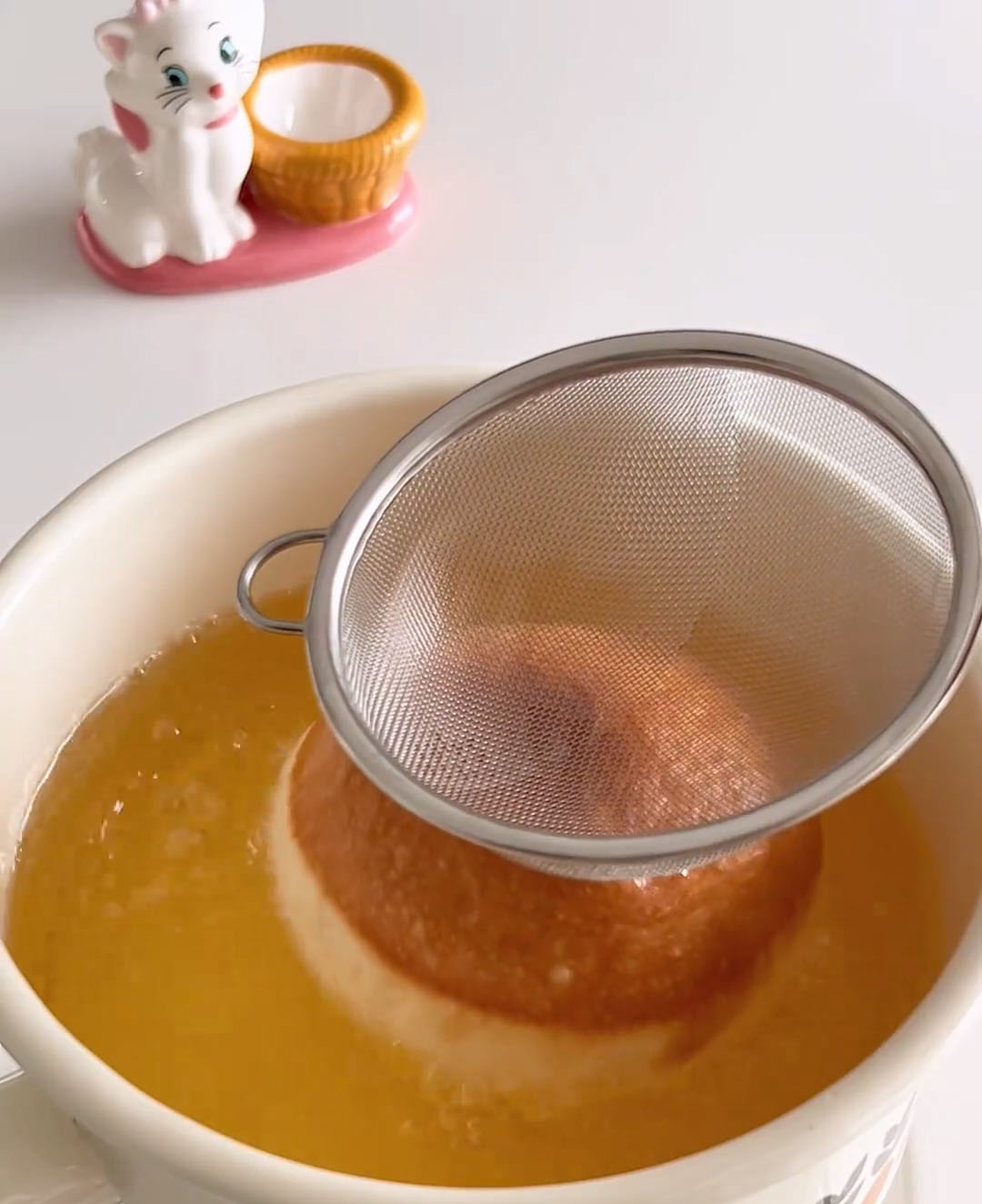
Remove and drain excess oil.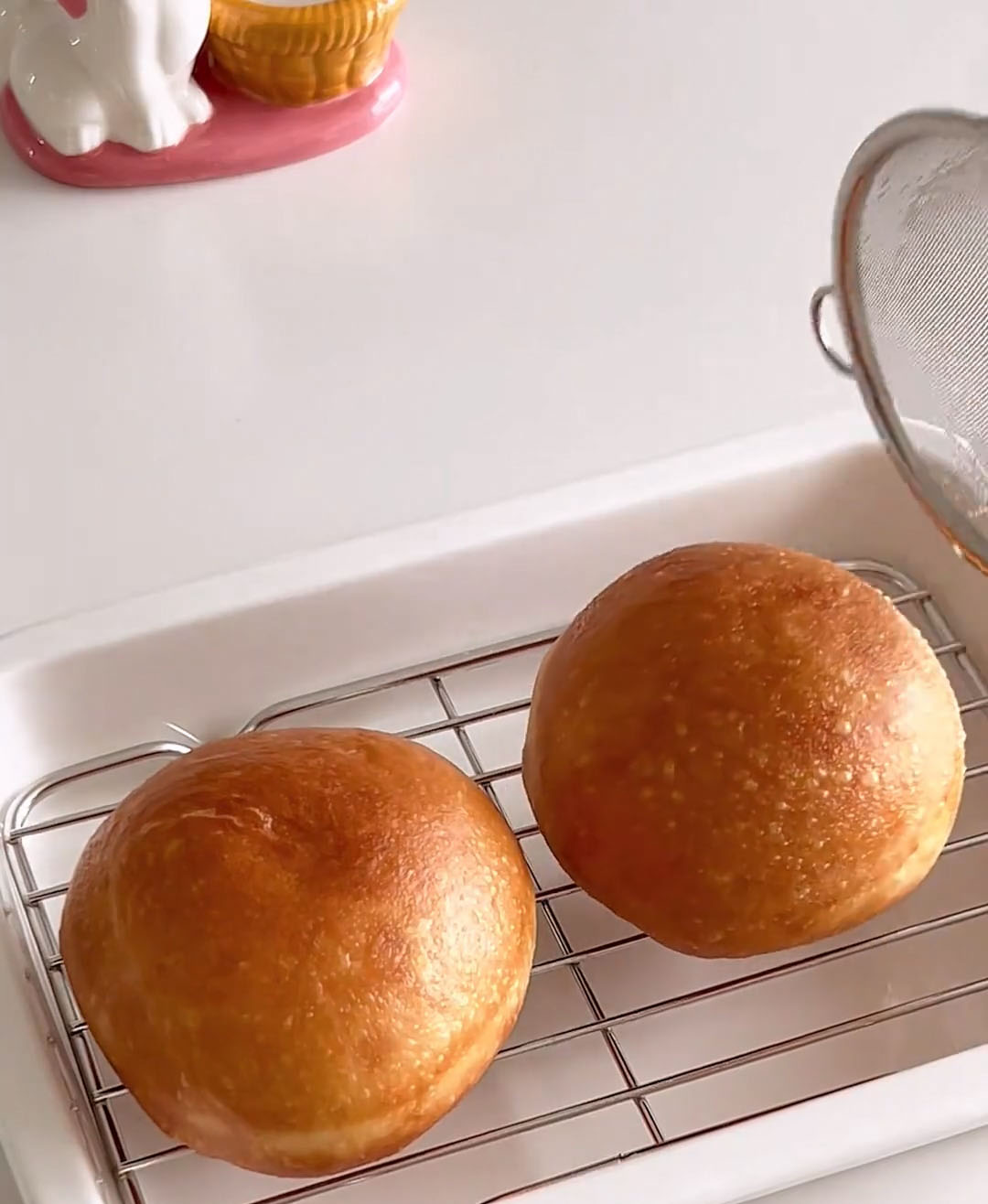
While still hot, roll each donut in granulated sugar until evenly coated. Set aside to cool completely.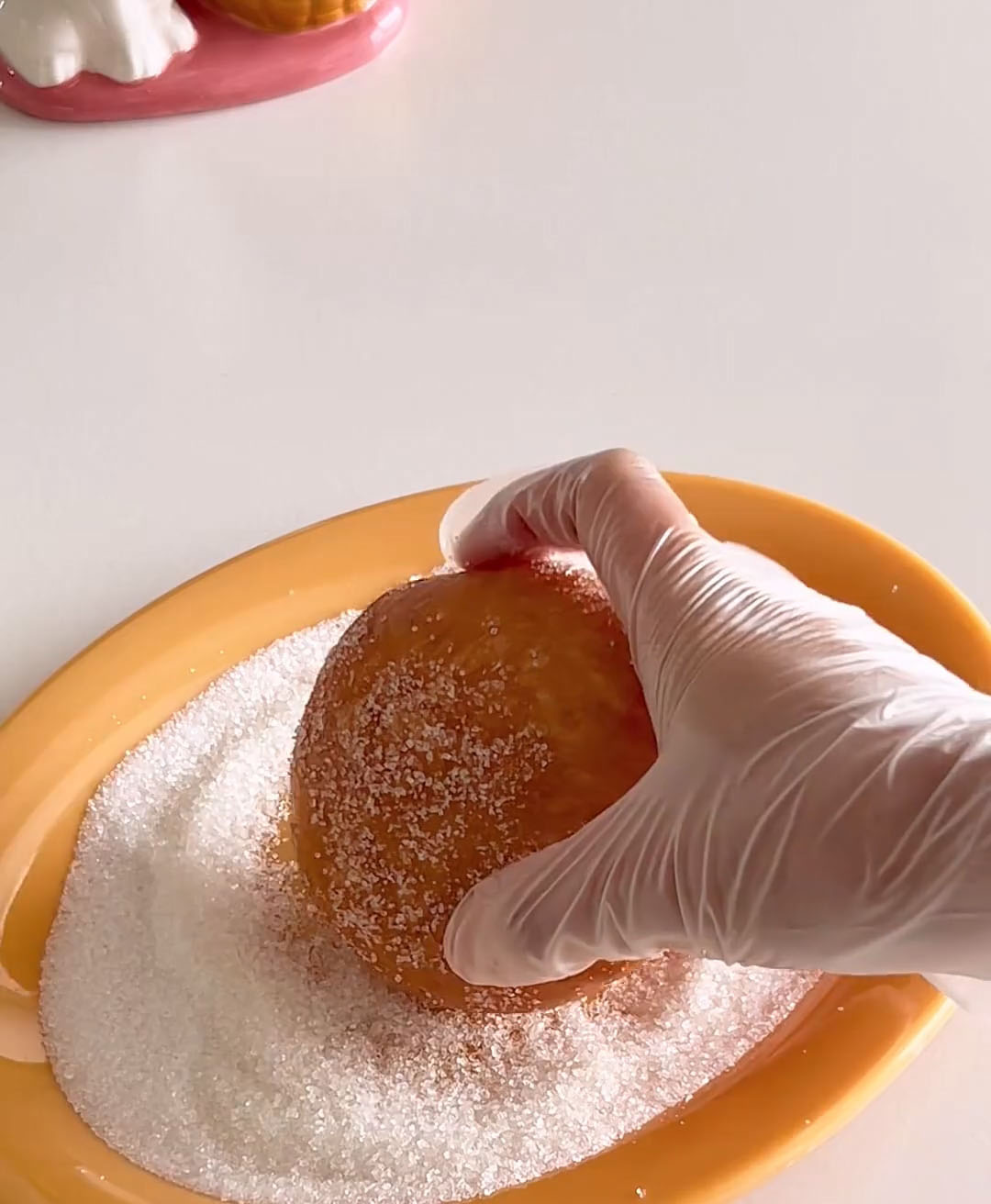
Cook the caramel and dip
In a small, heavy-bottomed saucepan, combine the 200g of sugar and 100g of water. Heat over medium heat. Do not stir. Swirl the pan occasionally if needed.
Let the mixture cook until it turns a deep amber color. To test, dip the tip of a fork or chopstick into the caramel and then immediately into a glass of ice water. The caramel should harden instantly into a brittle, glass-like thread.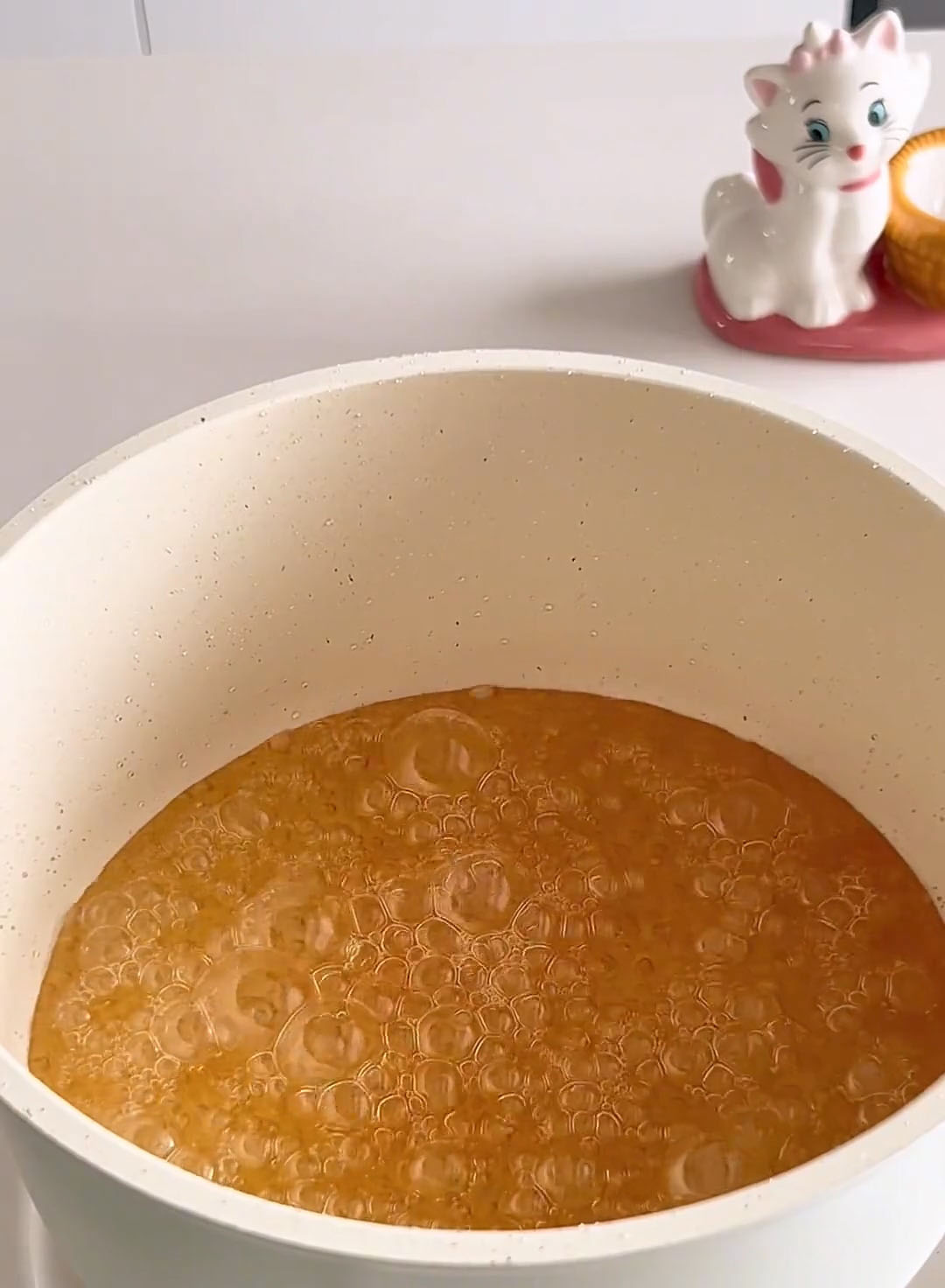
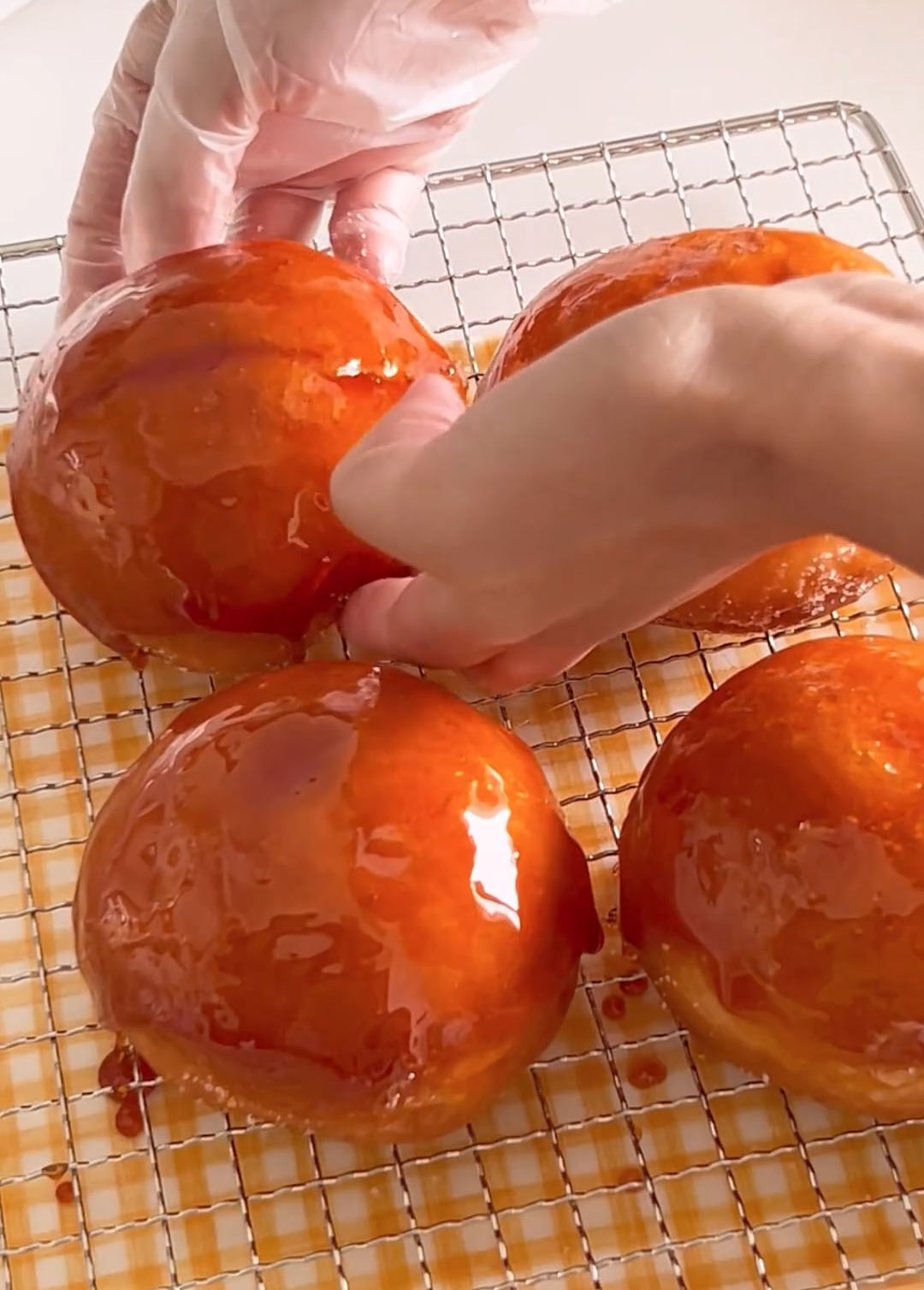
Once ready, immediately remove the pot from the heat. Working very quickly and carefully (the caramel is extremely hot), dip the top of each cooled, sugar-coated donut into the caramel, swirling to coat about half of the donut. Place them back on the wire rack to allow the caramel to harden completely, which happens in seconds.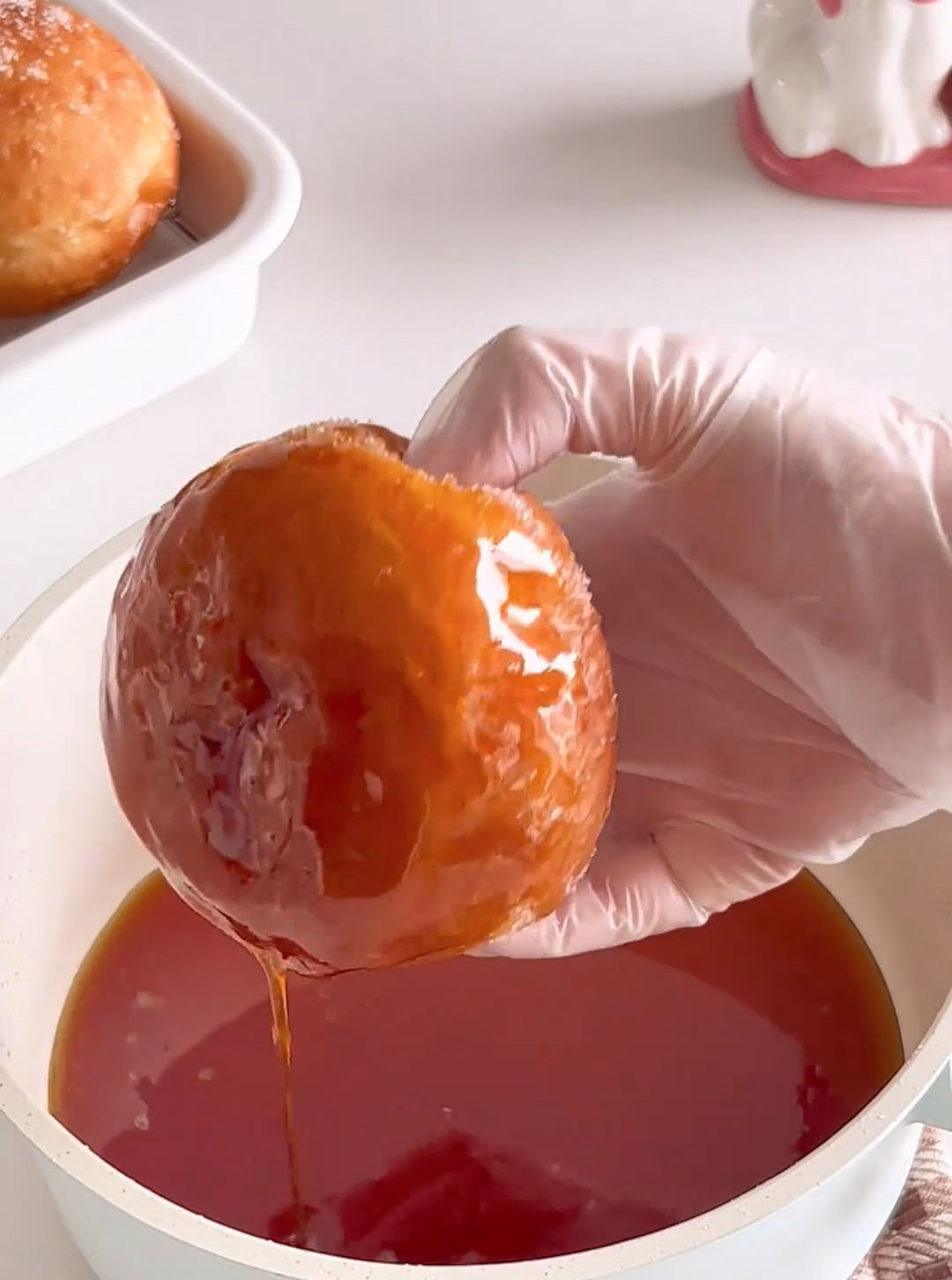
Fill with cream
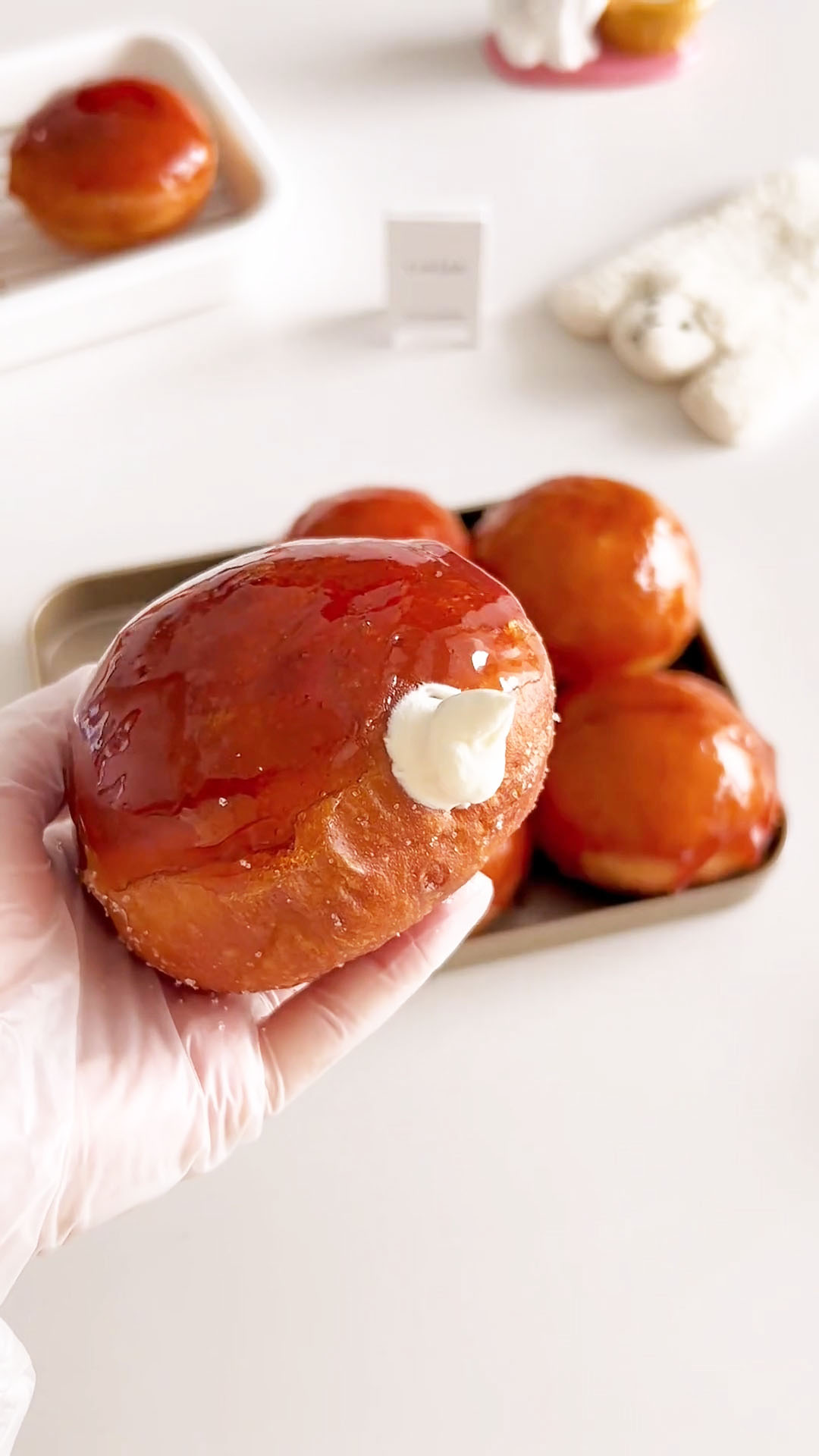
Once the caramel shells are completely set, use a chopstick or the handle of a small spoon to poke a hole in the side of each donut (preferably on the side without caramel for easier filling).
Fill a piping bag fitted with a small round tip with well-chilled whipping cream.
Insert the tip into the hole you created and gently squeeze to fill the donut until you feel slight resistance and the donut plumps up slightly. Wipe away any excess cream. Serve immediately for the best texture.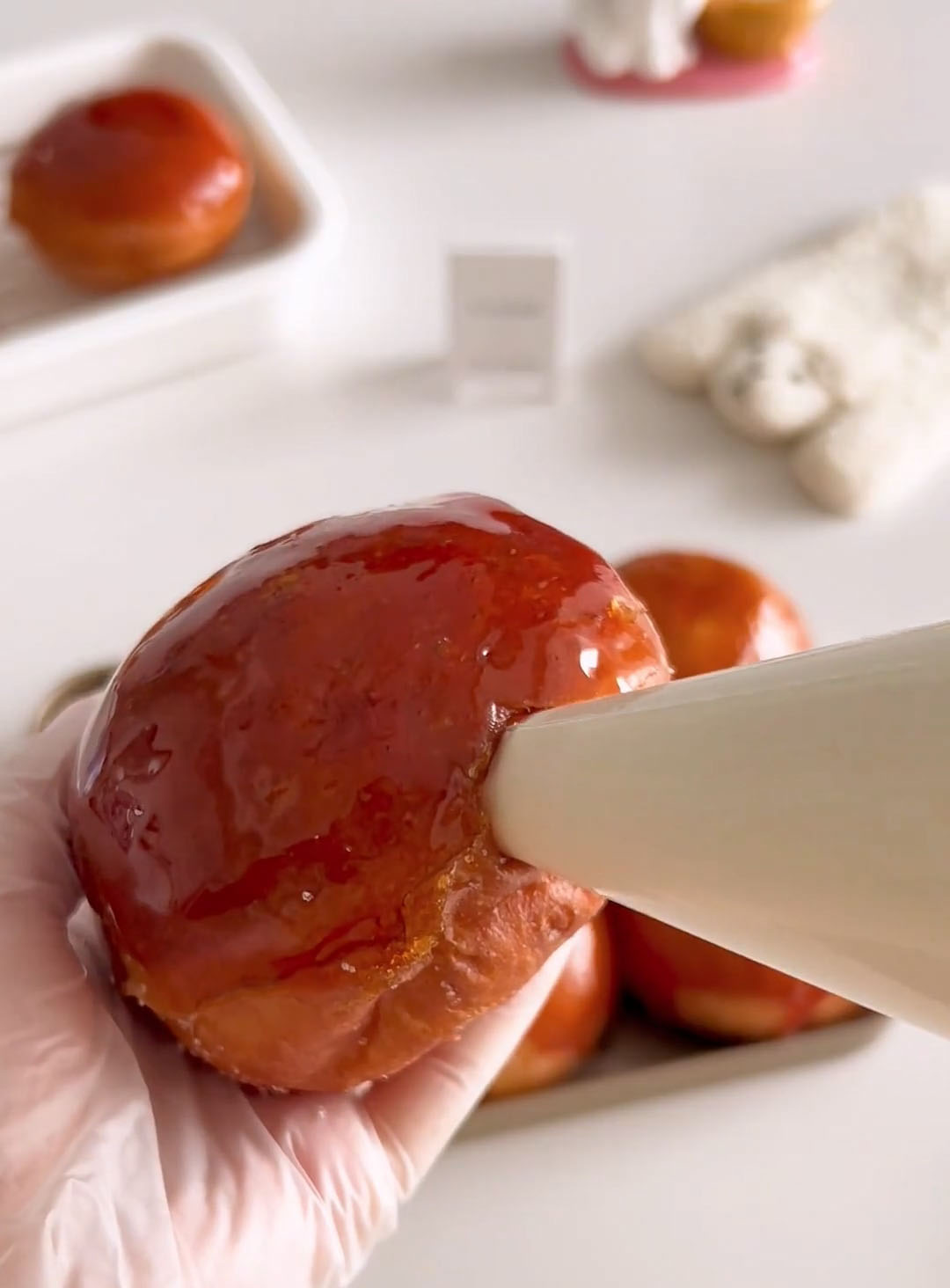
Tips & tricks
- Knead until a thin membrane forms. This step is crucial for soft, fluffy donuts after frying.
- Control fermentation temperature carefully. Too cold leads to under-proofing; too hot can cause sour dough.
- Use hot water in the oven during second proof to maintain humidity and prevent the dough from drying out.
- Maintain oil temperature at 160–170°C. Oil that’s too hot will burn the exterior while leaving the inside raw; too cool will make the donuts greasy.
- Do not stir the caramel while cooking or it may crystallize.
- Work quickly when dipping in caramel. Once it cools, it will harden and won’t coat evenly.
Frequently asked questions
Why are my donuts dense instead of fluffy?
The dough may not have been kneaded enough, or fermentation may have been insufficient. Proper gluten development and correct proofing temperature are essential.
Why is my caramel grainy?
The caramel may have crystallized due to stirring or contamination. Make sure not to stir the sugar syrup while cooking.
Why is my caramel bitter?
The caramel was cooked too long. Once it turns golden and passes the cold-water crisp test, remove it from heat immediately.
Can I make these donuts ahead of time?
They’re best enjoyed fresh for maximum crispness, but you can prepare the donuts earlier in the day and fill them with cream just before serving.
Viral-Style Exploding Caramel Donuts Recipe
Ingredients
For the Donut Dough
- 350 g bread flour
- 50 g whole egg room temperature
- 180 g milk
- 50 g granulated sugar
- 3 g salt
- 4 g high-sugar-tolerant yeast instant
- 40 g unsalted butter softened
For Frying & Coating
- Neutral oil for frying, such as canola or vegetable
- Granulated sugar as needed for coating
For the Caramel Brittle
- 200 g fine granulated sugar
- 100 g water
- For the Filling
- Whipping cream as needed (chilled)
Instructions
Knead the dough and first proof
- In the bowl of a stand mixer fitted with a dough hook, combine the bread flour, sugar, egg, milk, and high-sugar-tolerant yeast, and salt. Mix on low speed until just combined and no dry flour remains, about 2-3 minutes. Increase the speed to medium-high and knead for 5-7 minutes, until the dough is cohesive and pulls away from the sides of the bowl, forming a rough gluten network (it should tear easily when stretched).
- Add the softened butter and mix on low speed until the butter is fully absorbed into the dough.
- Then, increase the speed to medium-high and knead for another 8-10 minutes, until the dough is very smooth, elastic, and passes the windowpane test (you can stretch a small piece thinly into a translucent membrane without it tearing).
- Shape the dough into a ball, place it in a container, and proof at 28°C for about 50 minutes, until doubled in size. When pressed with a finger, the indentation should not spring back or collapse.
Divide, rest, and second proof
- Remove the dough and gently press to release excess air.
- Divide into 55 g portions and shape each into a smooth ball.
- Cover and let the dough rest for 15 minutes to prevent shrinking during shaping.
- Place the dough balls onto a tray and gently flatten them. Put a bowl of hot water in the oven, set the temperature to 35°C, and proof for 40 minutes, until the dough is light, puffy, and airy.
Fry and coat with sugar
- Heat oil to 160–170°C. When chopsticks inserted into the oil produce steady, dense bubbles, the oil is ready.
- Fry the donuts until golden on both sides, flipping once for even colouring.
- Remove and drain excess oil.
- While still hot, roll each donut in granulated sugar until evenly coated. Set aside to cool completely.
Cook the caramel and dip
- In a small, heavy-bottomed saucepan, combine the 200g of sugar and 100g of water. Heat over medium heat. Do not stir. Swirl the pan occasionally if needed.
- Let the mixture cook until it turns a deep amber color. To test, dip the tip of a fork or chopstick into the caramel and then immediately into a glass of ice water. The caramel should harden instantly into a brittle, glass-like thread.
- Once ready, immediately remove the pot from the heat. Working very quickly and carefully (the caramel is extremely hot), dip the top of each cooled, sugar-coated donut into the caramel, swirling to coat about half of the donut. Place them back on the wire rack to allow the caramel to harden completely, which happens in seconds.
Fill with cream
- Once the caramel shells are completely set, use a chopstick or the handle of a small spoon to poke a hole in the side of each donut (preferably on the side without caramel for easier filling).
- Fill a piping bag fitted with a small round tip with well-chilled whipping cream.
- Insert the tip into the hole you created and gently squeeze to fill the donut until you feel slight resistance and the donut plumps up slightly. Wipe away any excess cream. Serve immediately for the best texture.
Leave a Reply