
This mango mousse cake is the ultimate tropical treat! Layers of crunchy biscuit base, fluffy mango mousse, and a shiny mango glaze make every bite rich yet refreshing. Perfect for parties or afternoon tea.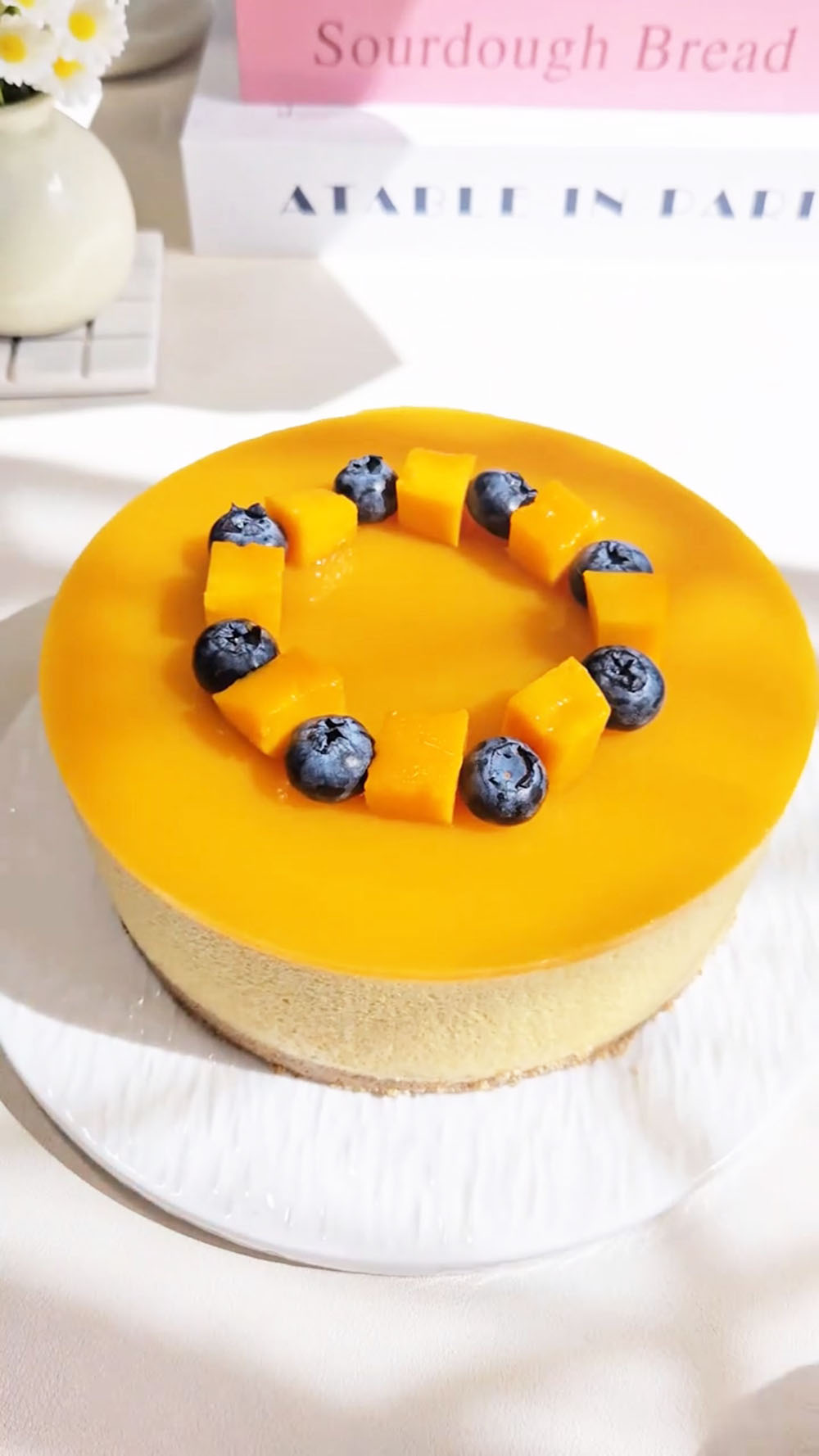
Mango is one of my all-time favorite fruits. Every time mango season comes around, I always buy a lot of them.
And honestly, turning the extra mangoes into desserts? It’s just perfect.
I know how much you loved my Strawberry Mousse Cake with Oreo Base and Cherry Matcha Cheesecake Mousse Cake, so you definitely don’t want to miss this one.
This mango mousse cake is light, creamy, and full of fresh mango flavor—I’m sure it’s going to become another must-make favorite in your kitchen.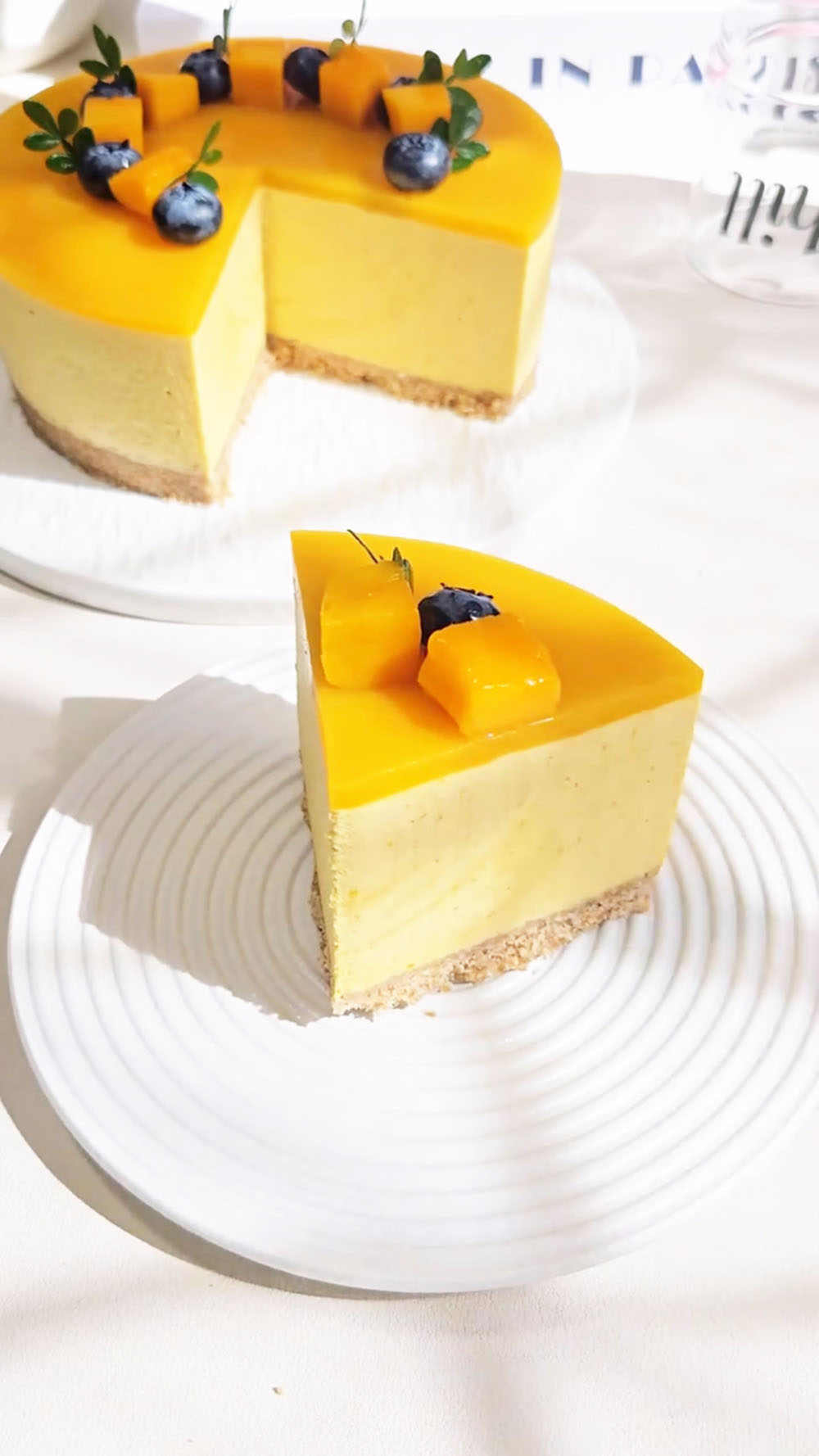
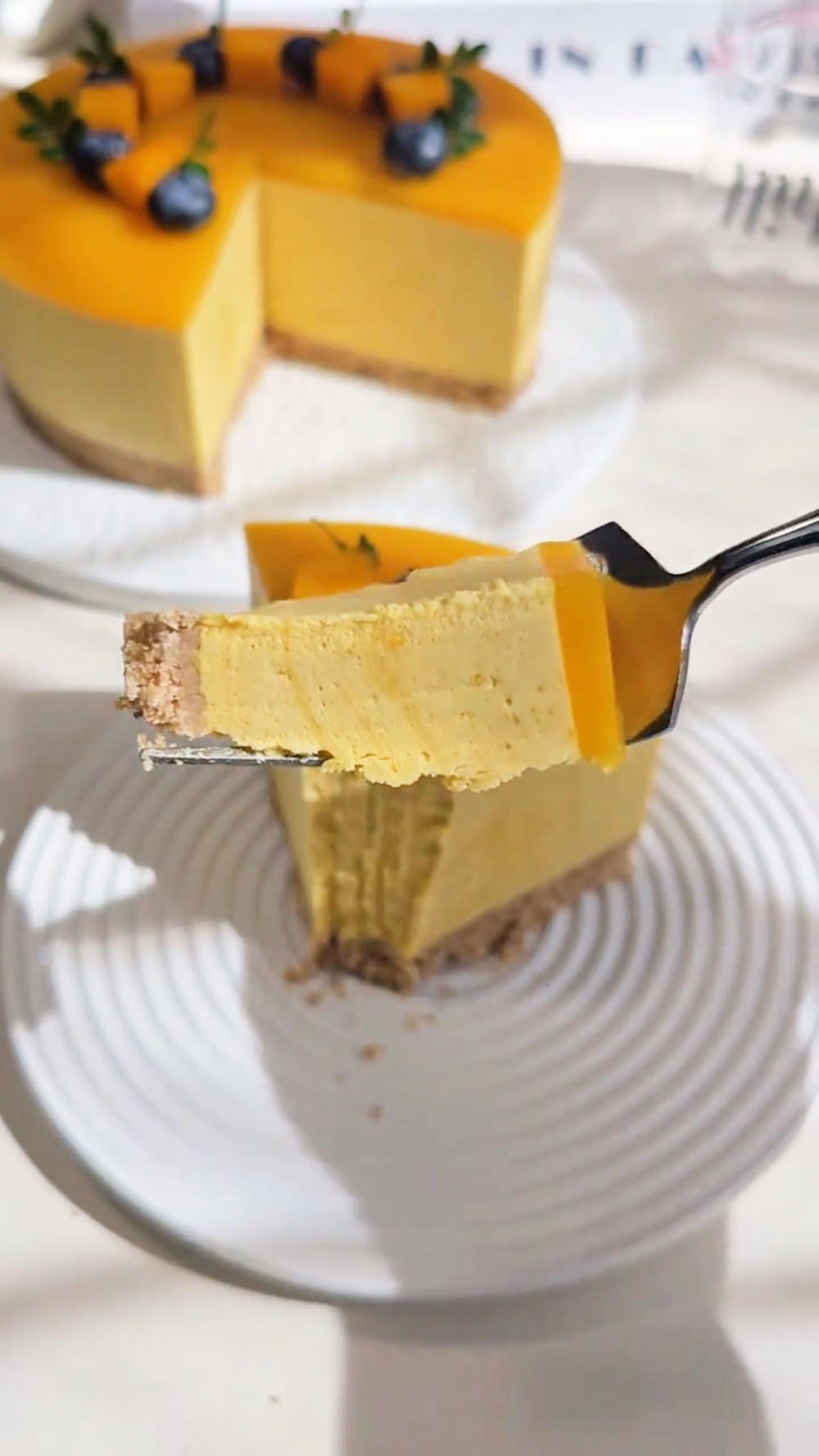
Why You’ll Love This Recipe
- This mango mousse cake is light, creamy, and not overly rich
- It’s packed with fresh mango flavor in both the mousse and topping
- No oven needed—perfect for beginners
- The layers are simple but look elegant and impressive
- It’s refreshing and perfect for warm weather or gatherings
Ingredients and Substitutions
- Digestive biscuits – These create a classic crunchy base that holds together well. You can also use Oreo cookies with the filling removed for a slightly different flavor.
- Butter – Melted butter helps bind the biscuit crumbs together and adds richness. I recommend using unsalted butter for better control of flavor.
- Mango flesh – Fresh mango is the star of this recipe. It should be ripe, sweet, and fragrant for the best flavor and natural sweetness.
- Granulated sugar – Used to balance the natural acidity of the mango and enhance its sweetness. You can slightly adjust it depending on how sweet your mango is.
- Gelatin sheets – Essential for setting both the mousse and the mirror layer. Always soak in cold water and squeeze dry before using.
- Whipping cream – Use dairy whipping cream for the best texture. It should be chilled and whipped to a yogurt-like consistency for a light and airy mousse.
- Water – Helps adjust the consistency of the mango mirror glaze so it spreads smoothly.
Ingredients
Biscuit Base (Crispy Foundation)
- 80 g digestive biscuits
- 40 g unsalted butter
Mango Mousse (Silky Main Body)
- 400 g fresh mango flesh
- 40 g granulated sugar
- 15 g gelatin sheets
- 220 g heavy cream
Mango Mirror Glaze (Moist Top Layer)
- 50 g mango puree
- 50 g water
- 5 g granulated sugar
- 3 g gelatin sheets
How to Make Mango Mousse Cake
For the Biscuit Base
- Make the crumb mixture: Place the 80 g of digestive biscuits into a sturdy plastic bag or between two sheets of parchment paper. Crush them into fine crumbs using a rolling pin. Transfer the crumbs to a medium bowl. Pour in the 40 g of melted unsalted butter and mix with a fork or spatula until all the crumbs are evenly coated and resemble wet sand.
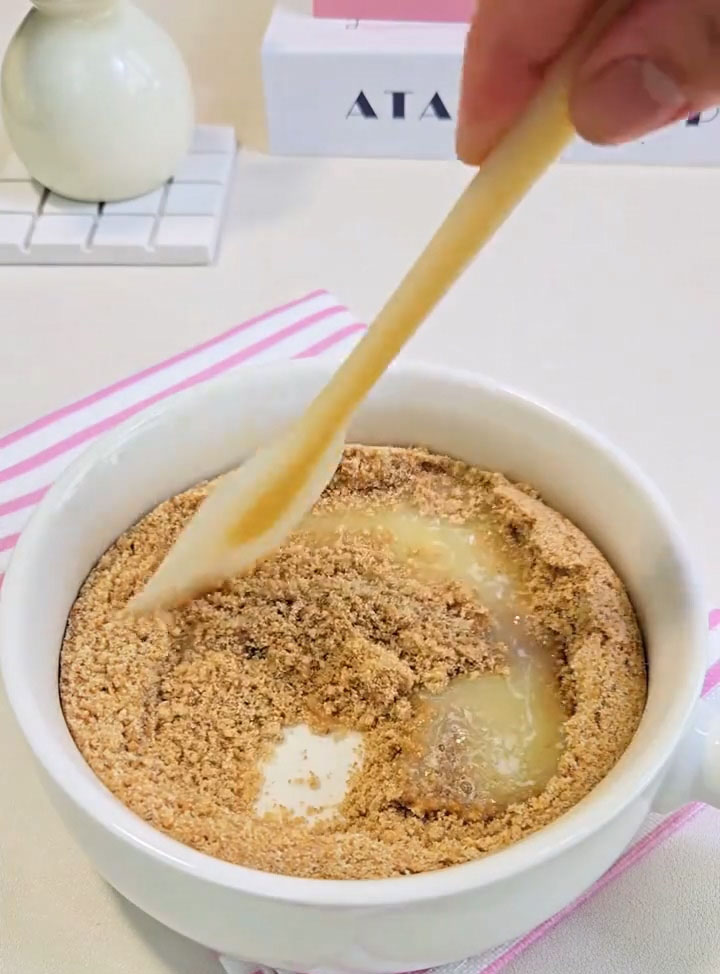
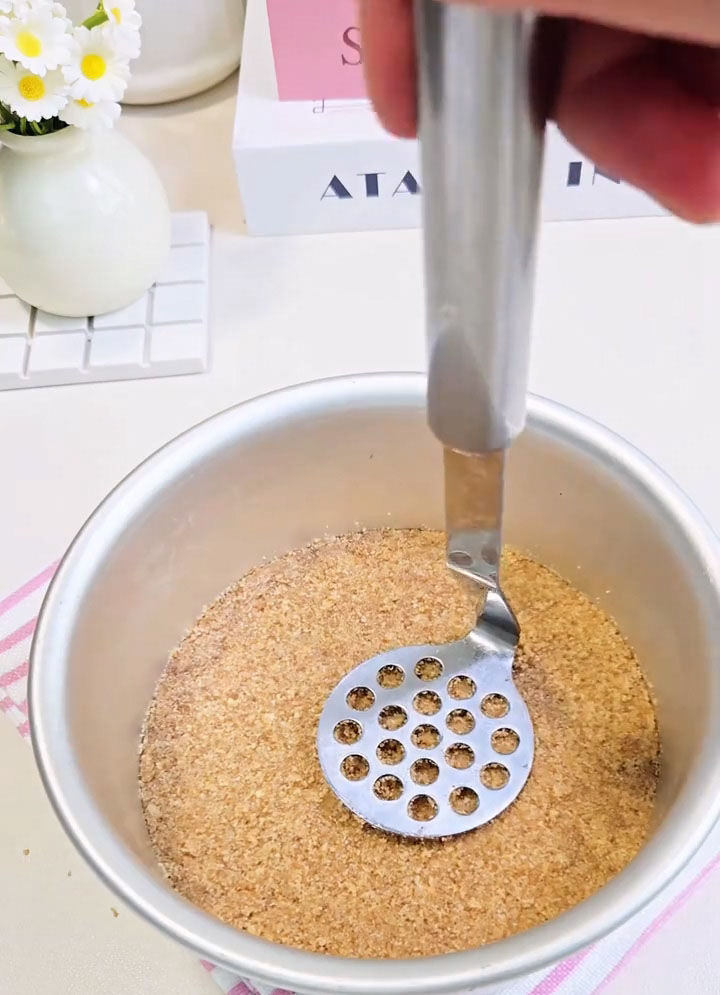
- Form the base: Line the bottom of a 6-inch springform cake mold with a circle of parchment paper. Pour the buttery crumb mixture into the mold. Use the bottom of a flat glass or a measuring cup to press the crumbs down firmly and evenly into the bottom of the pan. Set the base aside while you prepare the mousse.
For the Mango Mousse
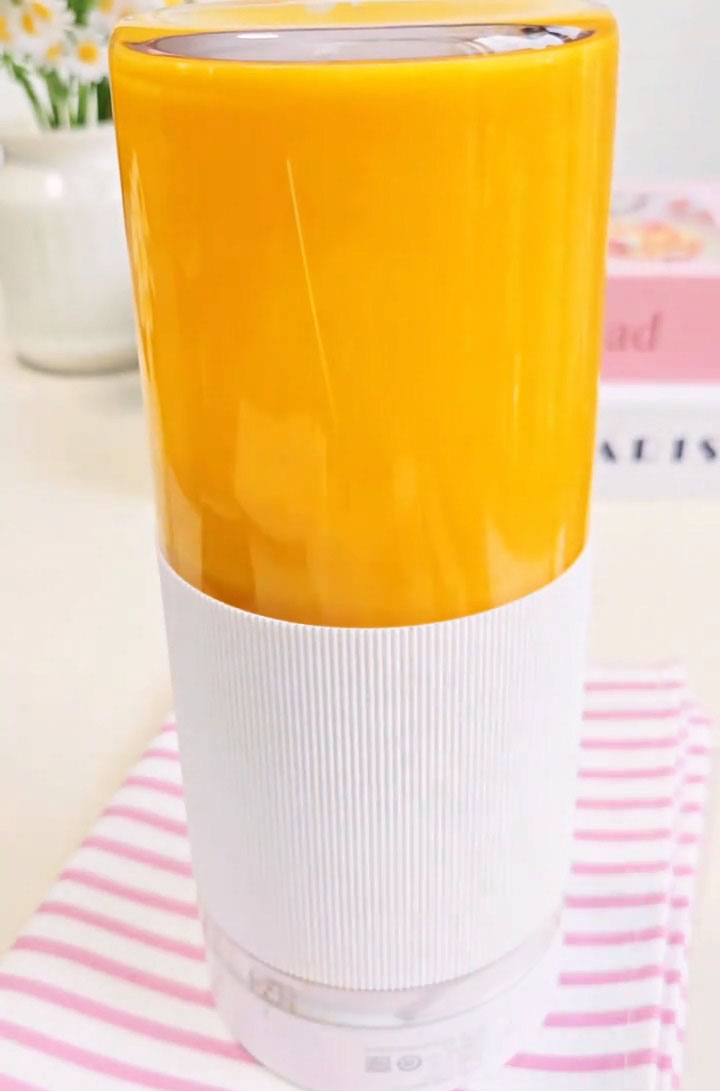
- Prepare the mango puree: Place the 400 g of fresh mango flesh in a food processor or blender. Blend until it is completely smooth, with no lumps or fibrous bits. Measure out 300 g of this puree for the mousse. (The remaining 50 g will be used for the mirror glaze.)
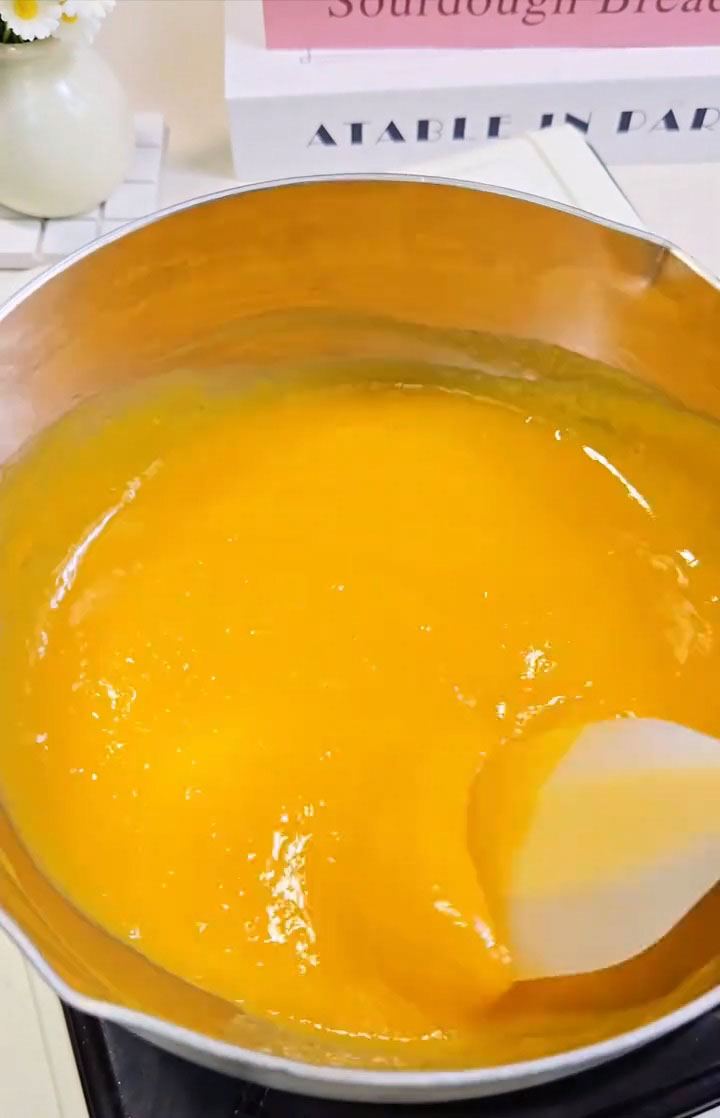
- Heat the puree: Pour the 300 g of mango puree into a small saucepan. Add the 40 g of granulated sugar. Heat the mixture over low flame, stirring constantly, just until the sugar has completely dissolved. Remove from the heat immediately and set aside to cool until it reaches 55°C (131°F).
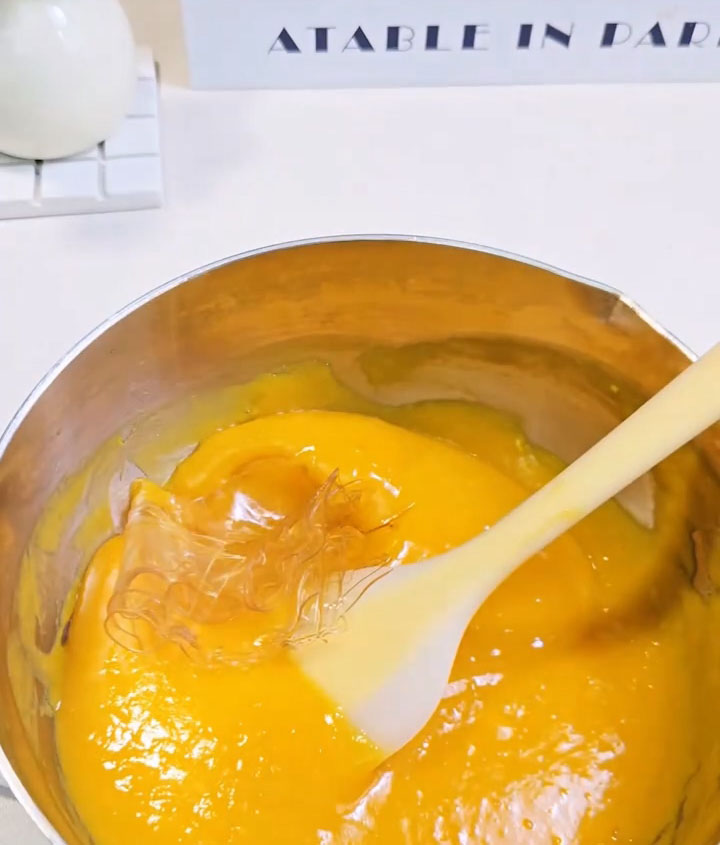
- Bloom and melt the gelatin: While the puree is cooling, place the 15 g of gelatin sheets in a bowl of cold water. Let them soak for 5-10 minutes until they are fully softened. Once the puree has cooled to 55°C, remove the gelatin sheets from the water, squeeze firmly to remove any excess water, and add them to the warm puree. Stir until the gelatin is completely dissolved.
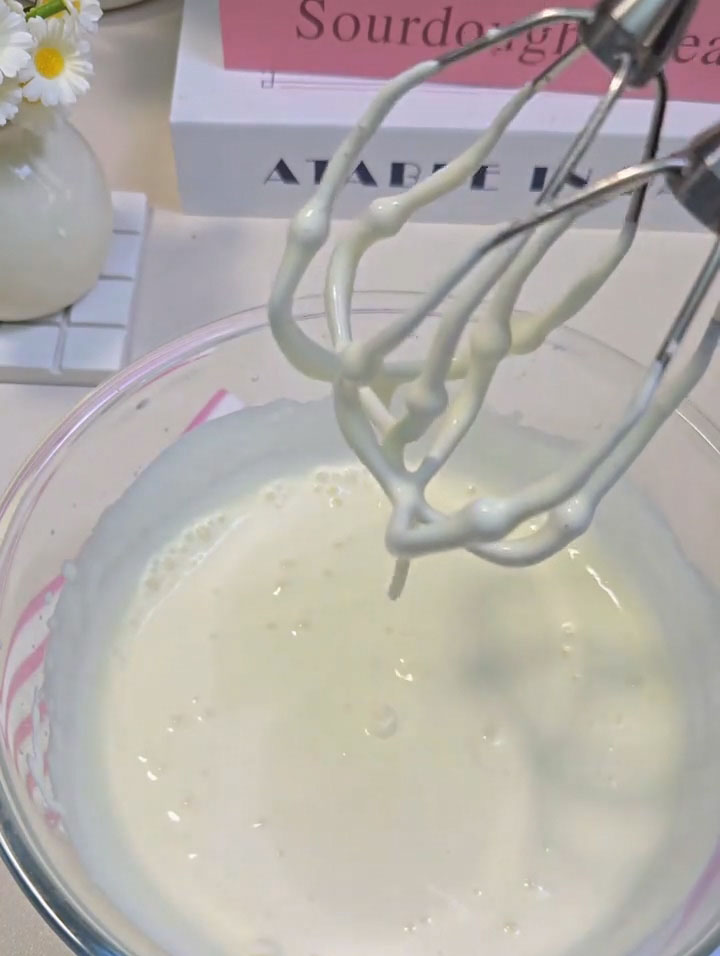
- Whip the cream: In a separate, clean mixing bowl, add the 220 g of chilled heavy cream. Using a hand mixer or a whisk, whip the cream until it reaches a thick, yogurt-like consistency. It should hold a soft trail when drizzled but still be fluid, not stiff.
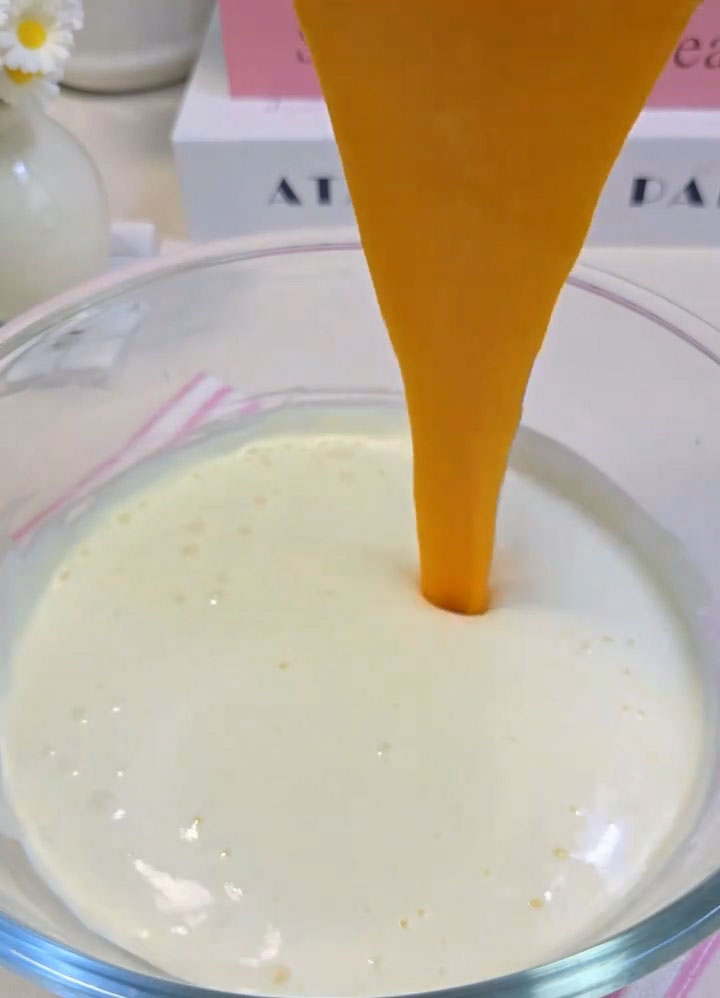
- Combine to make the mousse: Pour the mango-gelatin mixture into the whipped cream. Use a silicone spatula to gently fold everything together until the mixture is uniform and no streaks of cream remain. Be careful not to overmix, as you want to keep the mousse light and airy.
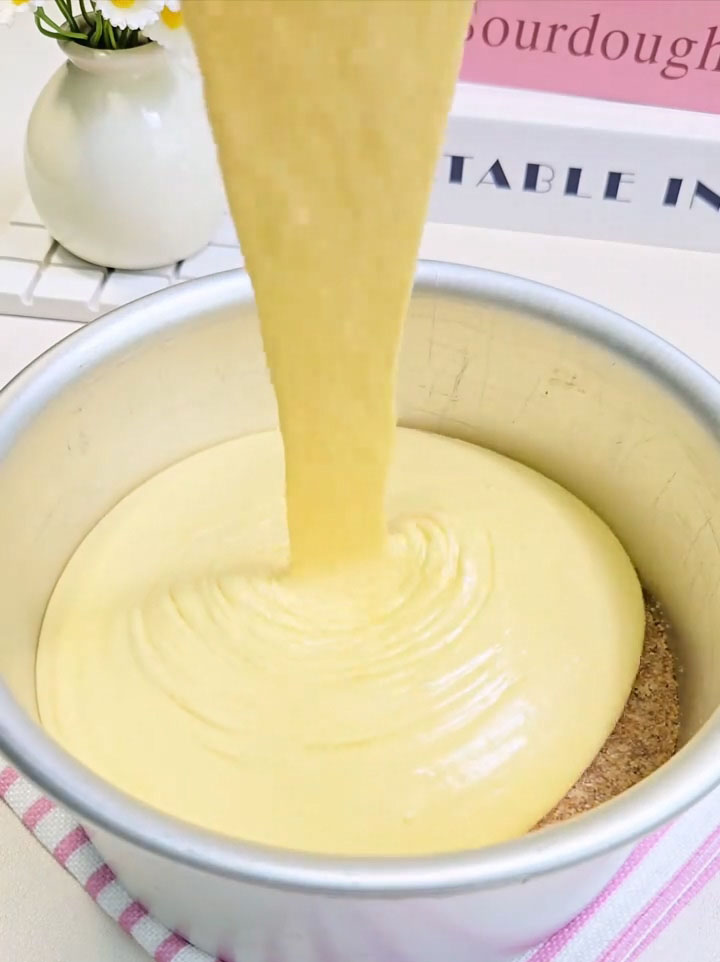
- Assemble the first layer: Pour the mango mousse onto the prepared biscuit base. Gently tap the mold on the counter a few times to release any large air bubbles. Place the mold in the freezer for 20 minutes to allow the mousse layer to set just enough to support the next layer.
For the Mango Mirror Glaze
- Make the glaze: Take the reserved 50 g of mango puree and pour it into a small saucepan. Add the 50 g of water and the 5 g of granulated sugar. Heat over low flame, stirring, just until the sugar has dissolved. Remove from the heat and let it cool until it reaches 55°C (131°F).
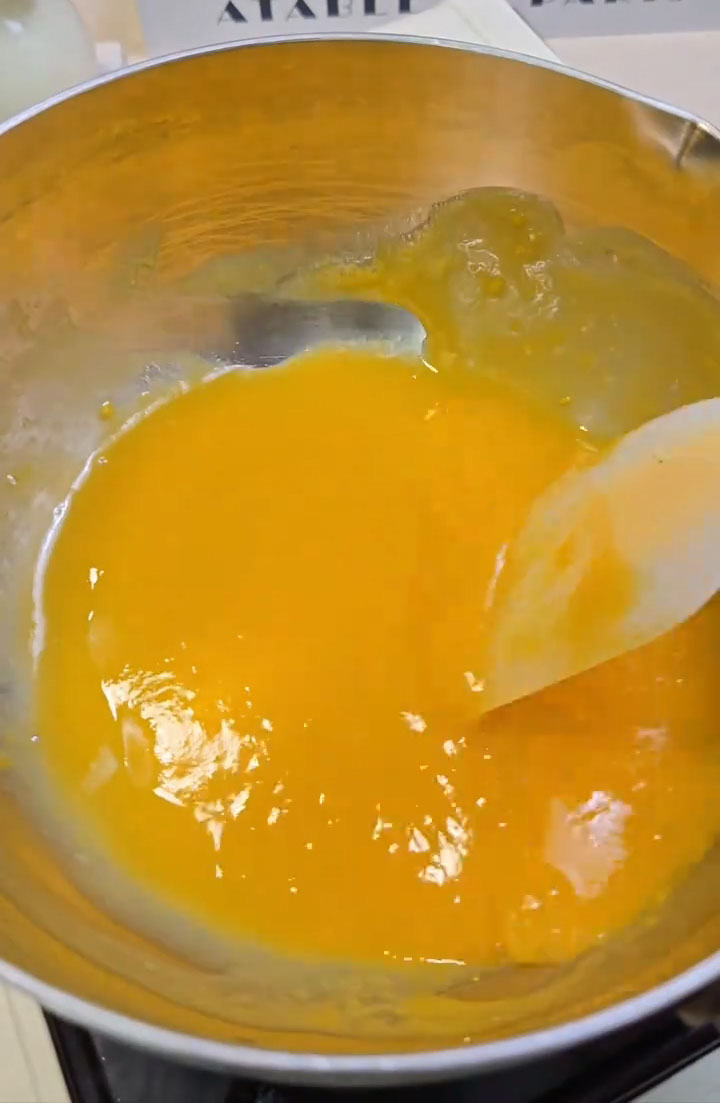
- Bloom and melt the glaze gelatin: Soak the 3 g of gelatin sheets in cold water until soft. Squeeze out the excess water, then add them to the 55°C glaze mixture. Stir until the gelatin is completely dissolved. Allow the glaze to cool until it is just lukewarm to the touch.
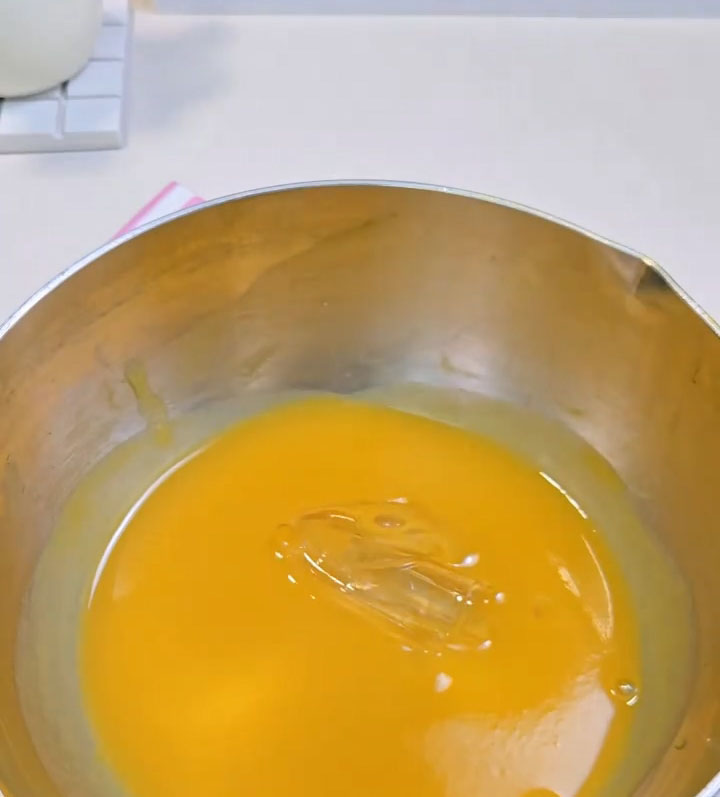
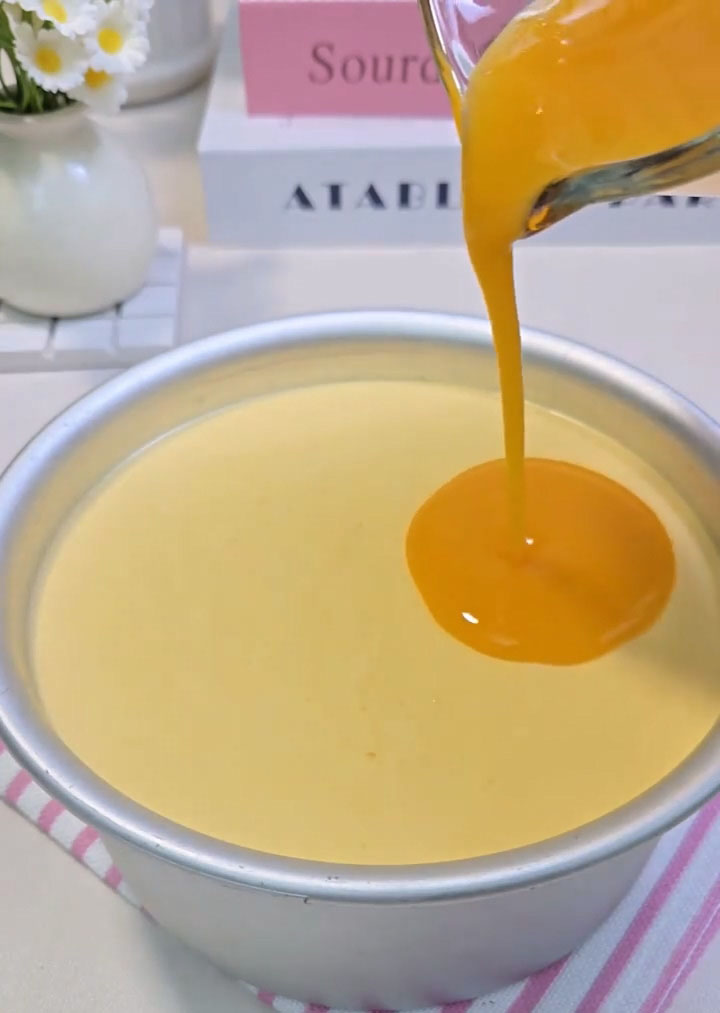
- Add the final layer: Remove the mold from the freezer. Gently and slowly pour the cooled mango glaze over the top of the semi-set mousse. Give the mold a gentle swirl to ensure the glaze is level. Return the cake to the refrigerator and let it chill for at least 6 hours, but preferably overnight, to fully set.
For Unmolding and Decorating
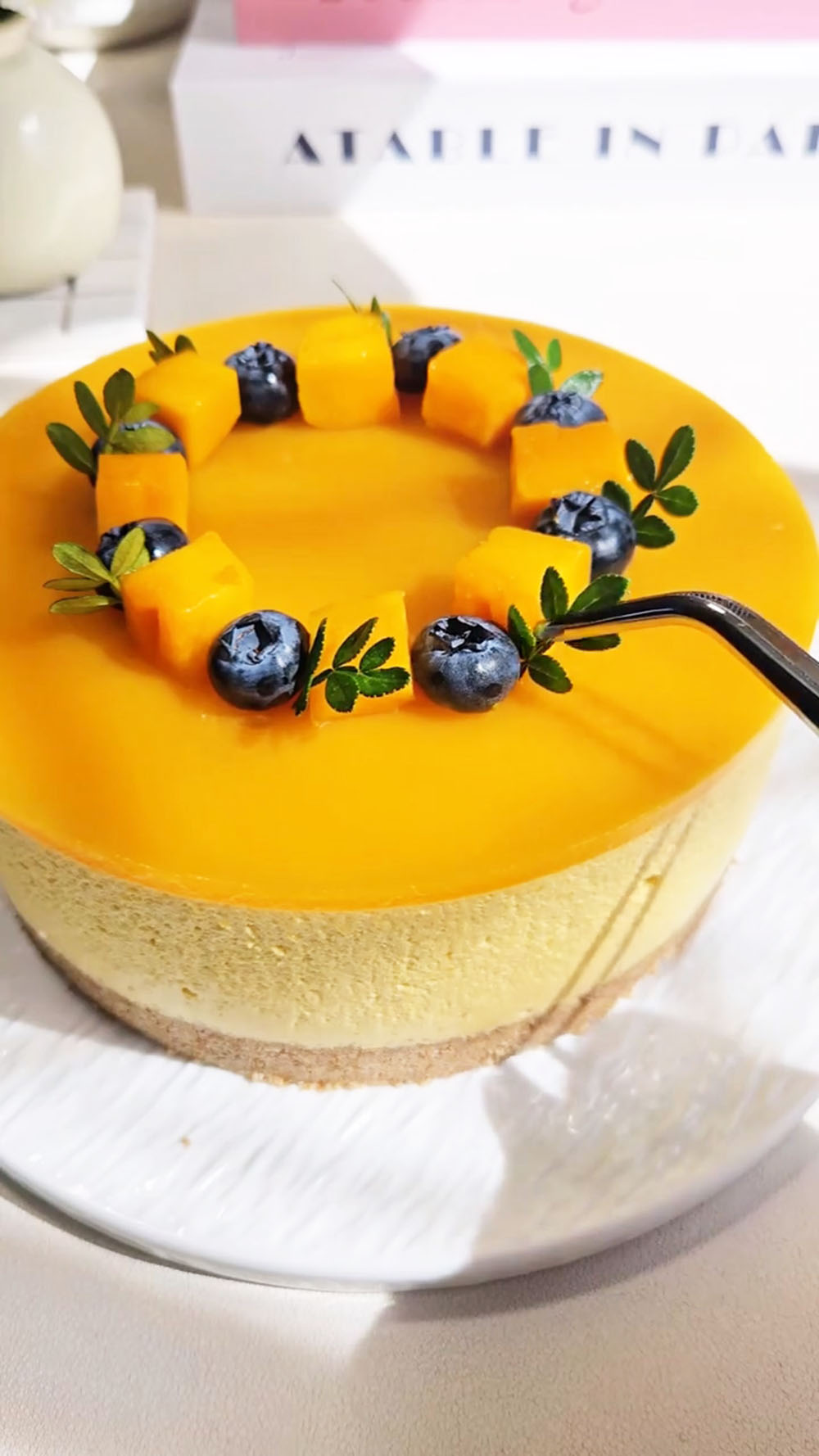
- Unmold and serve: Once the cake is completely firm, remove it from the refrigerator. To unmold, you can wrap a warm, damp towel around the outside of the springform pan for a few seconds to loosen the edges, then carefully release the clasp. Transfer the cake to a serving plate. Decorate with fresh mango slices, blueberries, mint leaves, or edible flowers as desired.
Tips & Tricks
- Use a food processor for smooth puree: For the silkiest mousse and glaze, ensure your mango puree is completely smooth. A high-speed blender or food processor works best to break down all the fibers. When heating the puree, always use low heat and remove it from the stove the moment the sugar dissolves to preserve the fresh, vibrant mango flavour.
- Master the gelatin technique: The temperature of the liquid you add your gelatin to is critical. Let your mango mixture cool to exactly 55°C (131°F) before adding the softened gelatin. If it’s too hot, it will damage the gelatin’s setting ability. If it’s too cool, the gelatin won’t dissolve properly and will leave lumps. Always soak your gelatin sheets in cold water until pliable and squeeze them dry before using.
- Perfect the whipped cream texture: The key to a light and airy mousse is to whip the cream only until it reaches a “yogurt-like” consistency. This means it has thickened and will leave a trail when you drizzle it, but it is not stiff or forming peaks. Over-whipping will make the final mousse dense and heavy rather than silky and delicate. Always use cream straight from the fridge for best results.
- Ensure clean, defined layers: The brief 20-minute freezing step for the mousse layer is essential. It creates a stable foundation, preventing the liquid mirror glaze from sinking into or mixing with the mousse. This ensures you get those beautiful, distinct layers. For the final set, patience is key—refrigerating overnight is a must to ensure the cake is firm enough to slice cleanly without collapsing.
- Get a professional mirror glaze: When making your glaze, be sure to let it cool until it is just lukewarm before pouring it over the mousse. If it’s too hot, it will melt the mousse layer below. Using only the specified 3g of gelatin for the glaze will give you a beautiful, tender, and moist top that cuts perfectly, rather than a firm, rubbery layer.
Frequently Asked Questions
Can I use frozen mango for this recipe?
Yes, you can absolutely use frozen mango. Just make sure to thaw it completely and drain off any excess liquid before blending it into a puree. This will ensure you have the correct concentration of flavour and the right consistency for both the mousse and the glaze.
Why is my mousse too soft or not setting?
This is usually a gelatin issue. The most common causes are: not letting the mango puree cool to the correct temperature (55°C) before adding the gelatin, which can weaken it; not letting the cake chill for the full recommended time (overnight is best); or using gelatin that has expired or was not properly bloomed in cold water.
Can I make this cake in advance?
This Mango Mousse Cake is an excellent make-ahead dessert! You can prepare the entire cake up to 1-2 days before you plan to serve it. Just keep it covered and stored in the refrigerator. In fact, the extra chilling time often makes the texture even better. Wait to add any fresh fruit or mint garnish until just before serving.
Why did my mirror glaze turn out cloudy or not shiny?
A cloudy glaze often results from not straining the puree before using it, or from incorporating too much air when mixing. For a perfect, clear, and shiny finish, ensure your mango puree is very smooth (straining it is an optional but effective step) and avoid vigorously whisking the glaze mixture after adding the gelatin.
No-Bake Mango Mousse Cake (Easy & Creamy Summer Dessert!)
Ingredients
Biscuit Base (Crispy Foundation)
- 80 g digestive biscuits
- 40 g unsalted butter
Mango Mousse (Silky Main Body)
- 400 g fresh mango flesh
- 40 g granulated sugar
- 15 g gelatin sheets
- 220 g heavy cream
Mango Mirror Glaze (Moist Top Layer)
- 50 g mango puree
- 50 g water
- 5 g granulated sugar
- 3 g gelatin sheets
Instructions
For the Biscuit Base
- Make the crumb mixture: Place the 80 g of digestive biscuits into a sturdy plastic bag or between two sheets of parchment paper. Crush them into fine crumbs using a rolling pin. Transfer the crumbs to a medium bowl. Pour in the 40 g of melted unsalted butter and mix with a fork or spatula until all the crumbs are evenly coated and resemble wet sand.
- Form the base: Line the bottom of a 6-inch springform cake mold with a circle of parchment paper. Pour the buttery crumb mixture into the mold. Use the bottom of a flat glass or a measuring cup to press the crumbs down firmly and evenly into the bottom of the pan. Set the base aside while you prepare the mousse.
For the Mango Mousse
- Prepare the mango puree: Place the 400 g of fresh mango flesh in a food processor or blender. Blend until it is completely smooth, with no lumps or fibrous bits. Measure out 300 g of this puree for the mousse. (The remaining 50 g will be used for the mirror glaze.)
- Heat the puree: Pour the 300 g of mango puree into a small saucepan. Add the 40 g of granulated sugar. Heat the mixture over low flame, stirring constantly, just until the sugar has completely dissolved. Remove from the heat immediately and set aside to cool until it reaches 55°C (131°F).
- Bloom and melt the gelatin: While the puree is cooling, place the 15 g of gelatin sheets in a bowl of cold water. Let them soak for 5-10 minutes until they are fully softened. Once the puree has cooled to 55°C, remove the gelatin sheets from the water, squeeze firmly to remove any excess water, and add them to the warm puree. Stir until the gelatin is completely dissolved.
- Whip the cream: In a separate, clean mixing bowl, add the 220 g of chilled heavy cream. Using a hand mixer or a whisk, whip the cream until it reaches a thick, yogurt-like consistency. It should hold a soft trail when drizzled but still be fluid, not stiff.
- Combine to make the mousse: Pour the mango-gelatin mixture into the whipped cream. Use a silicone spatula to gently fold everything together until the mixture is uniform and no streaks of cream remain. Be careful not to overmix, as you want to keep the mousse light and airy.
- Assemble the first layer: Pour the mango mousse onto the prepared biscuit base. Gently tap the mold on the counter a few times to release any large air bubbles. Place the mold in the freezer for 20 minutes to allow the mousse layer to set just enough to support the next layer.
For the Mango Mirror Glaze
- Make the glaze: Take the reserved 50 g of mango puree and pour it into a small saucepan. Add the 50 g of water and the 5 g of granulated sugar. Heat over low flame, stirring, just until the sugar has dissolved. Remove from the heat and let it cool until it reaches 55°C (131°F).
- Bloom and melt the glaze gelatin: Soak the 3 g of gelatin sheets in cold water until soft. Squeeze out the excess water, then add them to the 55°C glaze mixture. Stir until the gelatin is completely dissolved. Allow the glaze to cool until it is just lukewarm to the touch.
- Add the final layer: Remove the mold from the freezer. Gently and slowly pour the cooled mango glaze over the top of the semi-set mousse. Give the mold a gentle swirl to ensure the glaze is level. Return the cake to the refrigerator and let it chill for at least 6 hours, but preferably overnight, to fully set.
For Unmolding and Decorating
- Unmold and serve: Once the cake is completely firm, remove it from the refrigerator. To unmold, you can wrap a warm, damp towel around the outside of the springform pan for a few seconds to loosen the edges, then carefully release the clasp. Transfer the cake to a serving plate. Decorate with fresh mango slices, blueberries, mint leaves, or edible flowers as desired.
Leave a Reply