
This mango gelatin is soft, bouncy, and filled with fresh mango pieces. Made with coconut milk, it’s creamy, refreshing, and super easy to make!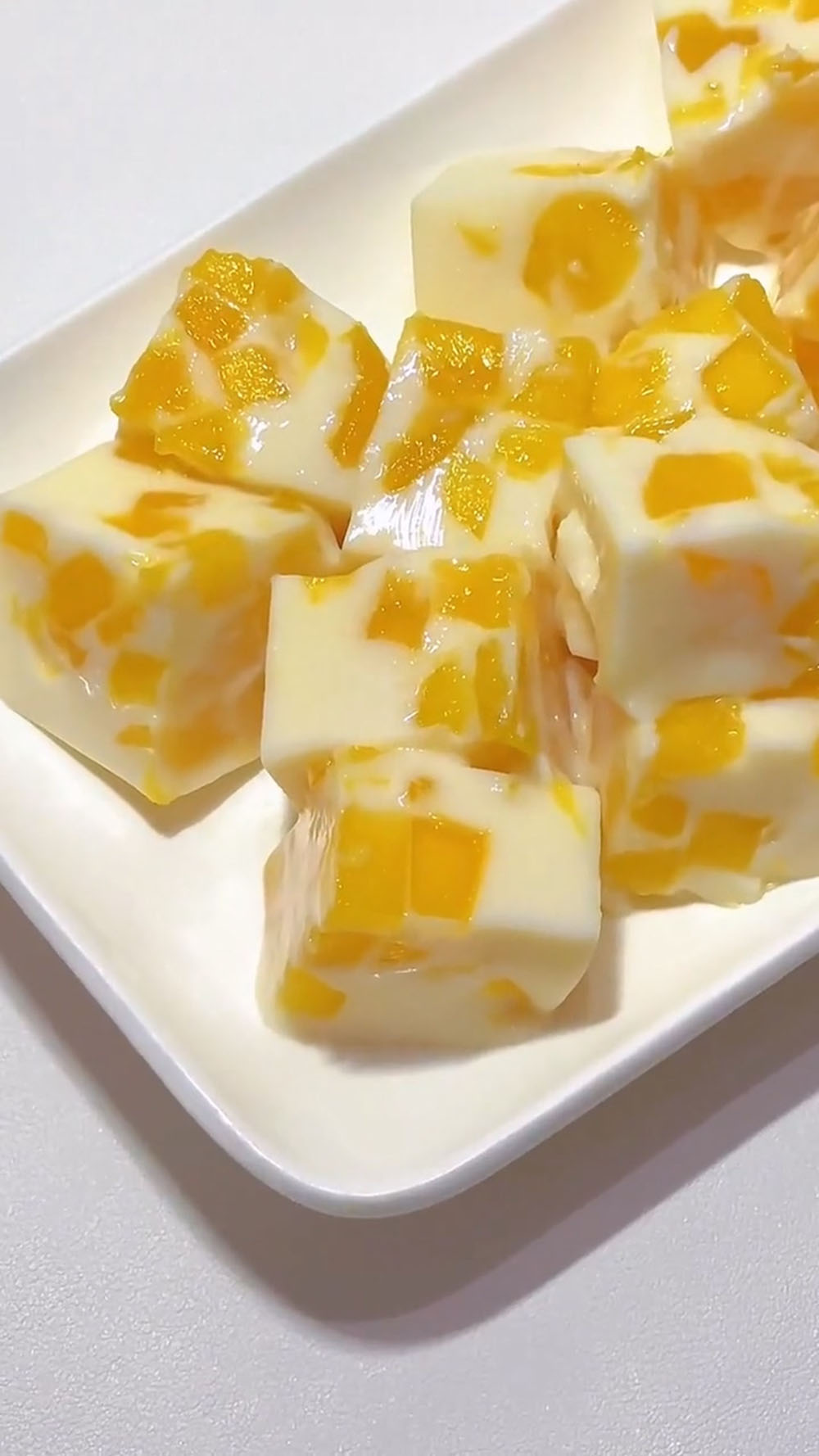
This Mango Gelatin has become a must-make dessert for me every mango season. The ingredients are simple and easy to find, and the recipe itself is quick and fuss-free—perfect even for a busy day.
What I love most is that you can make it ahead of time, so it’s ready whenever you need a refreshing treat.
Every time I serve it, it’s a hit—my family can’t get enough! We usually go for one piece each, and before I know it, the whole batch is gone.
If you love mango as much as I do, this Mango Gelatin is definitely one to add to your seasonal dessert rotation. It’s simple, satisfying, and guaranteed to impress.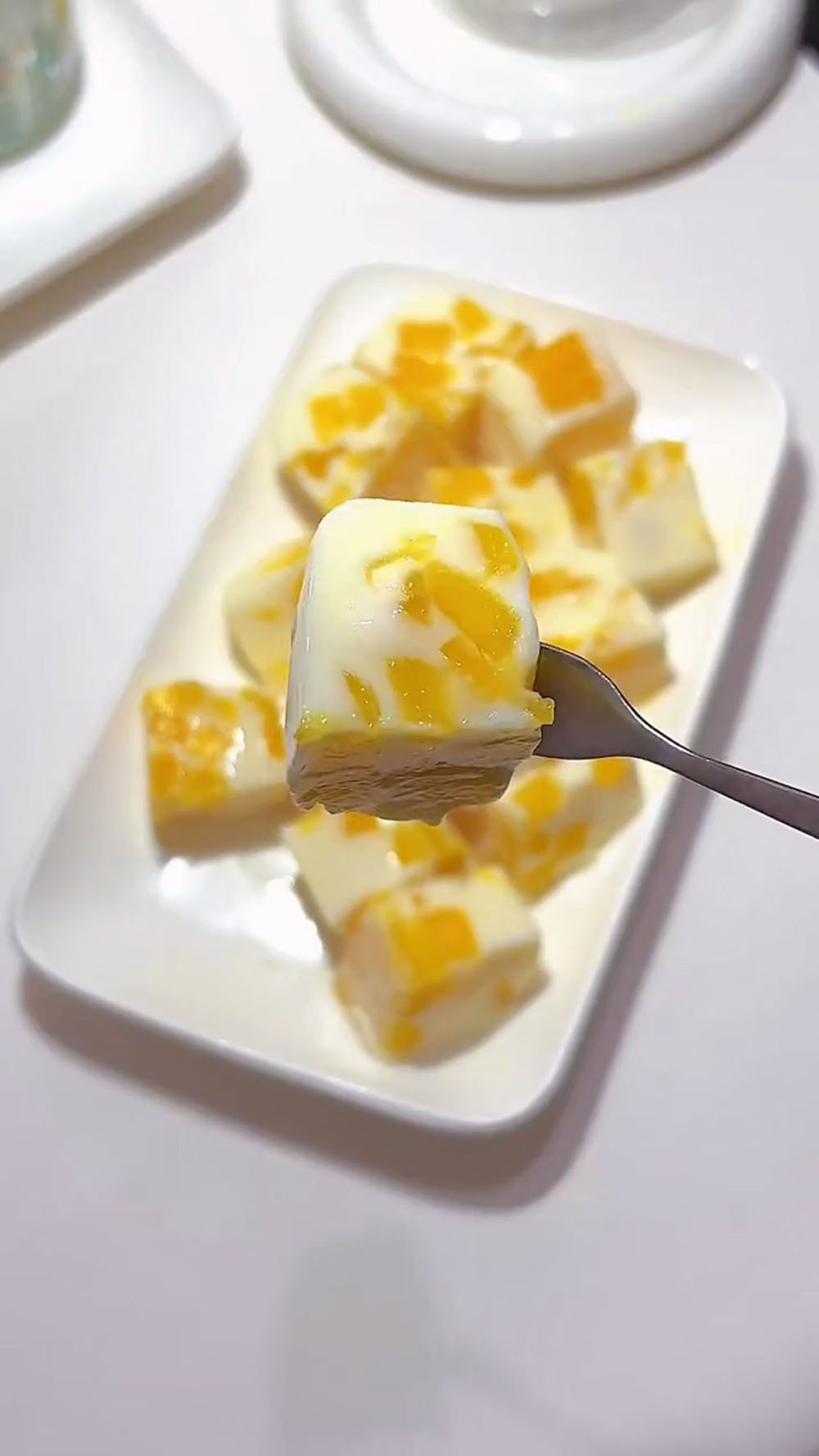
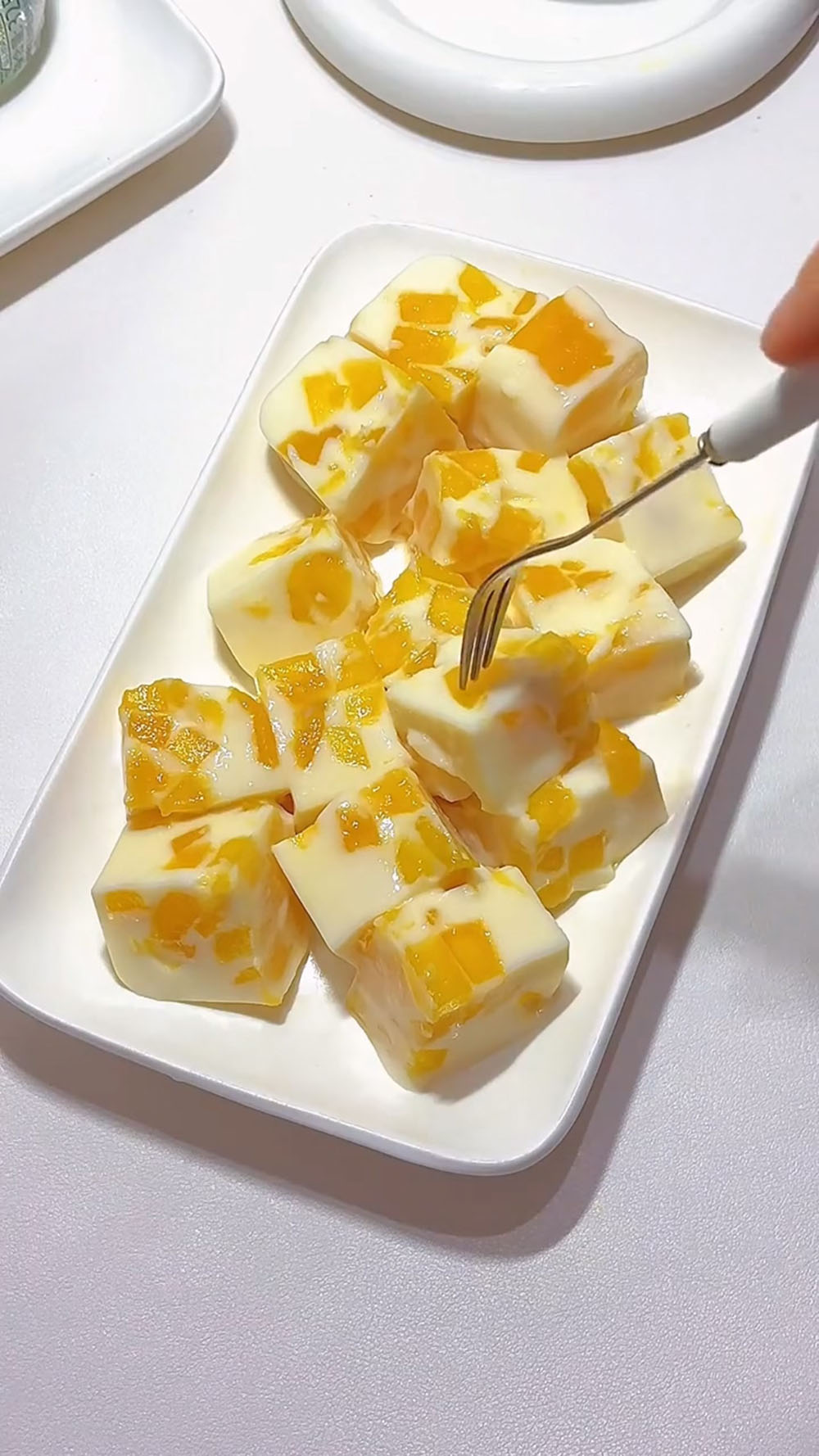
Why You’ll Love This Recipe
- This mango gelatin is soft, smooth, and perfectly bouncy in texture.
- It’s super easy and beginner-friendly, with no baking required.
- The combination of fresh mango + coconut milk creates a refreshing and tropical flavor.
- It’s light and not too sweet, making it perfect for everyday desserts.
- Great for make-ahead desserts—just chill and serve!
Ingredients and Substitutions
- Mango – Fresh mango gives the best flavor and juicy texture. I like cutting it into small cubes so every bite has a bit of fruit.
- Milk – I recommend using regular milk for a smooth and balanced base. It helps mellow the richness of the coconut milk.
- Coconut milk – This adds a creamy texture and a subtle coconut aroma. If you prefer a lighter flavor, you can slightly reduce it and increase the milk.
- Granulated sugar – Just enough to lightly sweeten the mixture without overpowering the natural mango flavor. You can adjust slightly to taste.
- Gelatin sheets – Essential for setting the jelly. Always soak in cold water first and dissolve in warm liquid—not hot—to maintain its setting ability.
Ingredients
- 1 mango
- 250 g pure milk
- 200 g coconut milk
- 25 g granulated sugar
- 20 g gelatin sheets
How to Make Mango Gelatin
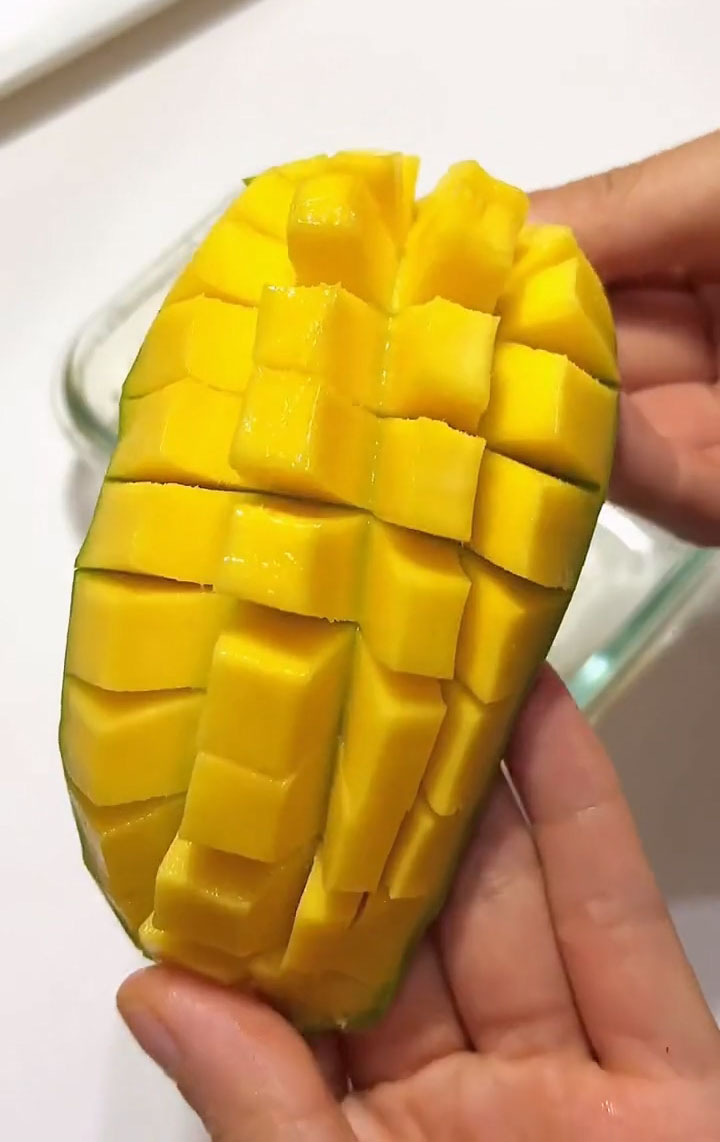
- Prepare the mango: Cut the mango in half, and dice the flesh into small, uniform cubes. Place the mango cubes into a storage container, pudding bowl, or individual serving glasses. Set aside.
- Heat the coconut milk mixture: In a small saucepan, combine 250 g pure milk, 200 g coconut milk, and 25 g granulated sugar. Place the saucepan over low heat and stir constantly with a whisk or spatula. Heat only until the sugar has completely dissolved. Do not bring the mixture to a boil and do not let it simmer. The mixture should remain warm throughout this entire process.
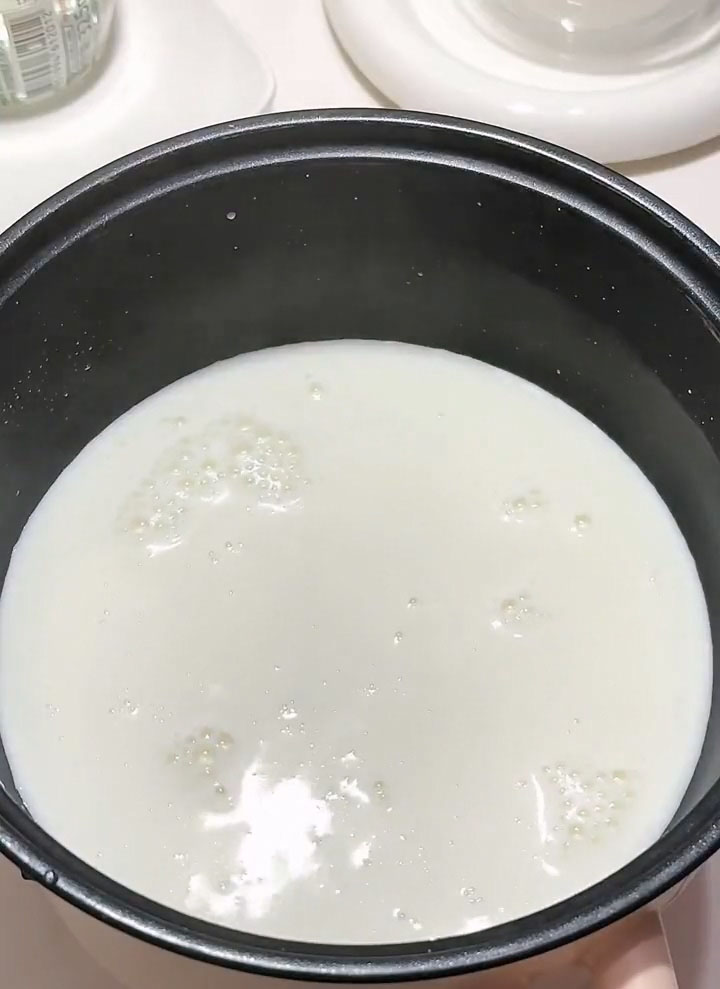
- Cool the mixture: Turn off the heat and remove the saucepan from the stove. Let the mixture cool until the temperature drops to below 60°C (140°F) . The liquid should feel warm but not hot to the touch. This step is critical for the gelatin to work properly.
- Bloom and melt the gelatin: While the mixture is cooling, place 20 g gelatin sheets in a bowl of cold water. Let them soak for 5–10 minutes until fully softened. Once the coconut milk mixture has cooled below 60°C, remove the gelatin sheets from the water, squeeze firmly to remove excess moisture, and add them to the warm coconut milk mixture. Stir continuously until the gelatin is completely dissolved and no lumps or visible pieces remain.
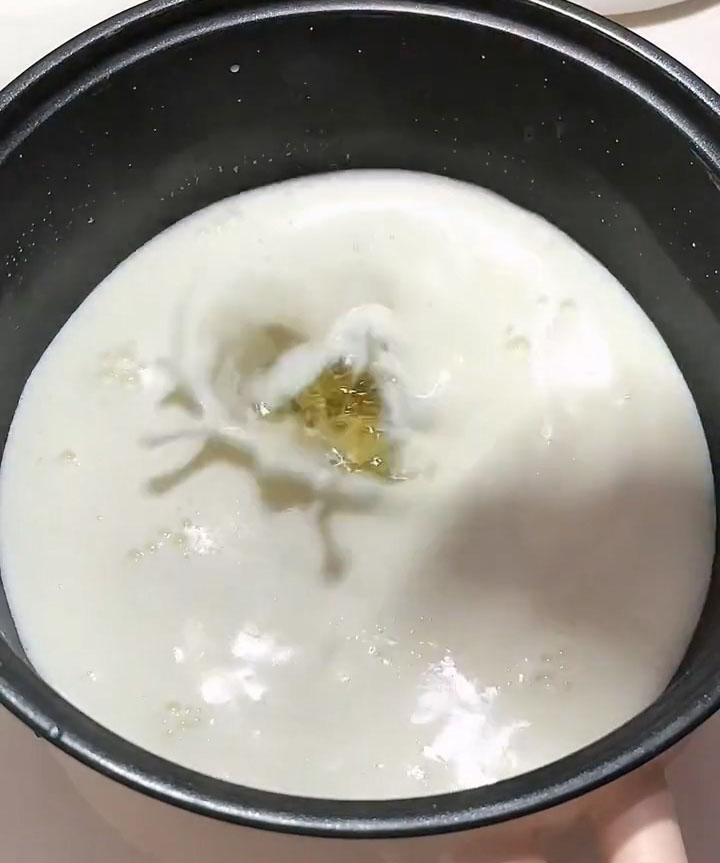
- Combine and pour: Let the coconut milk-gelatin mixture cool completely to room temperature. Do not pour it while still warm, as this could cause the mango cubes to soften or release excess liquid. Once fully cooled, gently pour the mixture over the mango cubes in the container.
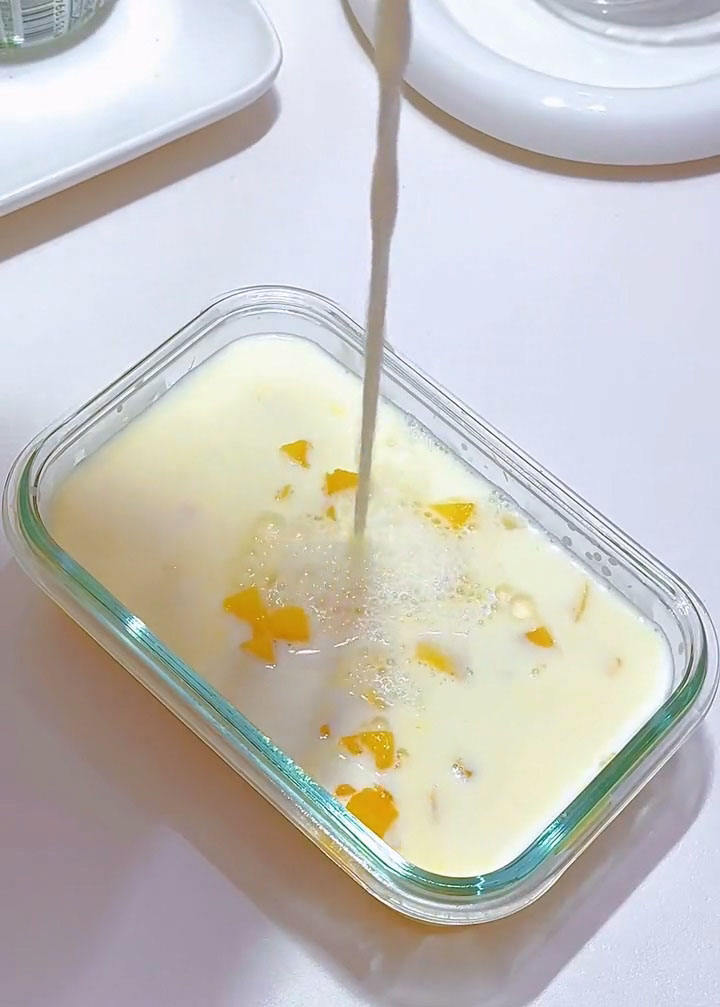
- Chill to set: Cover the container with plastic wrap or a lid. Place in the refrigerator and chill for at least 4 hours, or until the jelly is completely firm and set. For best results, I recommend chilling overnight.
- Unmold and serve: Once fully set, remove the jelly from the refrigerator. To unmold, wrap a warm, damp towel around the outside of the container for 30–60 seconds to gently loosen the edges. Invert onto a cutting board or serving plate, then slice into pieces. Alternatively, you can serve the jelly directly from the container by scooping it out with a spoon.
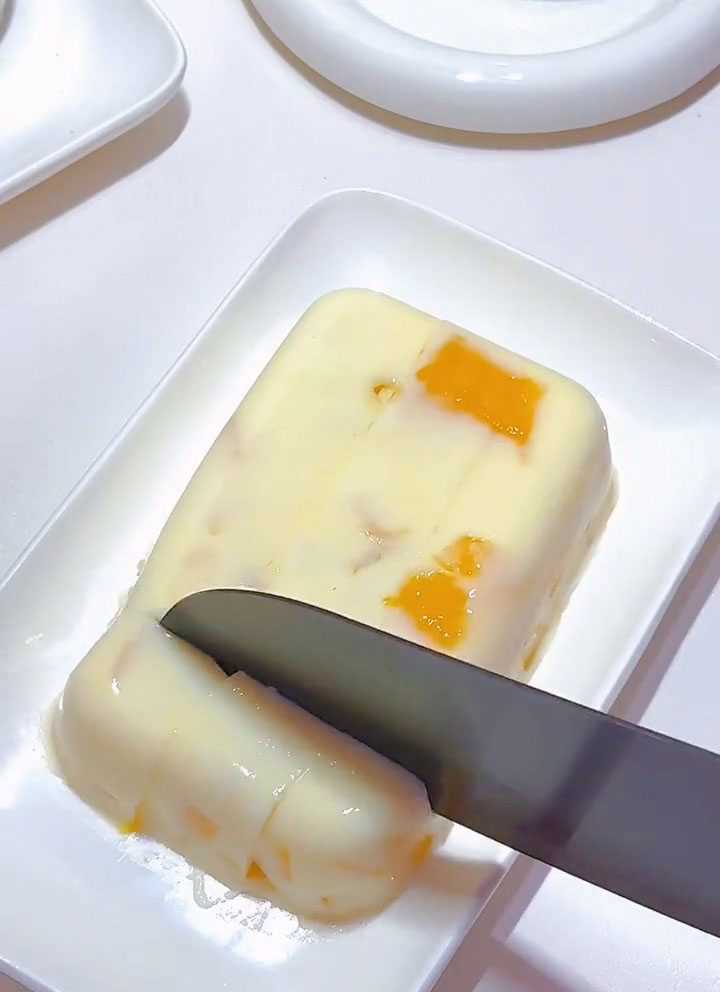
Tips & Tricks
- Gelatin temperature matters – Always add gelatin when the liquid is warm, not hot, or it won’t set properly.
- Do not boil – Boiling can cause the coconut milk to separate and affect the smooth texture.
- Adjust sweetness – You can increase sugar slightly if you prefer a sweeter dessert.
- Easy unmolding – Wrap the outside of the mold with a warm towel to release cleanly.
- Texture control – For a softer jelly, slightly reduce gelatin; for firmer, keep as is.
Frequently Asked Questions
Why didn’t my jelly set properly?
The mixture may have been too hot when adding gelatin, which can weaken its setting ability. Make sure it cools below 60°C first.
Can I use powdered gelatin instead?
Yes, but you’ll need to bloom it in cold water first before adding it to the warm mixture.
Can I make this ahead of time?
Definitely! This dessert is perfect for making in advance and chilling overnight.
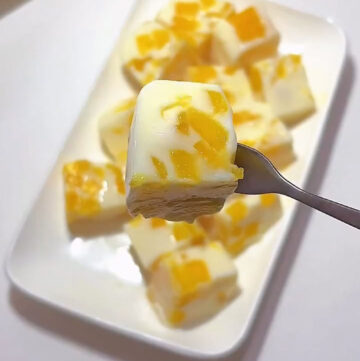
Easy Mango Gelatin – Refreshing Summer Dessert Idea
Ingredients
- 1 mango
- 250 g pure milk
- 200 g coconut milk
- 25 g granulated sugar
- 20 g gelatin sheets
Instructions
- Prepare the mango: Cut the mango in half, and dice the flesh into small, uniform cubes. Place the mango cubes into a storage container, pudding bowl, or individual serving glasses. Set aside.
- Heat the coconut milk mixture: In a small saucepan, combine 250 g pure milk, 200 g coconut milk, and 25 g granulated sugar. Place the saucepan over low heat and stir constantly with a whisk or spatula. Heat only until the sugar has completely dissolved. Do not bring the mixture to a boil and do not let it simmer. The mixture should remain warm throughout this entire process.
- Cool the mixture: Turn off the heat and remove the saucepan from the stove. Let the mixture cool until the temperature drops to below 60°C (140°F) . The liquid should feel warm but not hot to the touch. This step is critical for the gelatin to work properly.
- Bloom and melt the gelatin: While the mixture is cooling, place 20 g gelatin sheets in a bowl of cold water. Let them soak for 5–10 minutes until fully softened. Once the coconut milk mixture has cooled below 60°C, remove the gelatin sheets from the water, squeeze firmly to remove excess moisture, and add them to the warm coconut milk mixture. Stir continuously until the gelatin is completely dissolved and no lumps or visible pieces remain.
- Combine and pour: Let the coconut milk-gelatin mixture cool completely to room temperature. Do not pour it while still warm, as this could cause the mango cubes to soften or release excess liquid. Once fully cooled, gently pour the mixture over the mango cubes in the container.
- Chill to set: Cover the container with plastic wrap or a lid. Place in the refrigerator and chill for at least 4 hours, or until the jelly is completely firm and set. For best results, I recommend chilling overnight.
- Unmold and serve: Once fully set, remove the jelly from the refrigerator. To unmold, wrap a warm, damp towel around the outside of the container for 30–60 seconds to gently loosen the edges. Invert onto a cutting board or serving plate, then slice into pieces. Alternatively, you can serve the jelly directly from the container by scooping it out with a spoon.
Leave a Reply