
If you love mango desserts, you have to try this! This mango pudding is creamy, not too sweet, and has the most satisfying melt-in-your-mouth texture.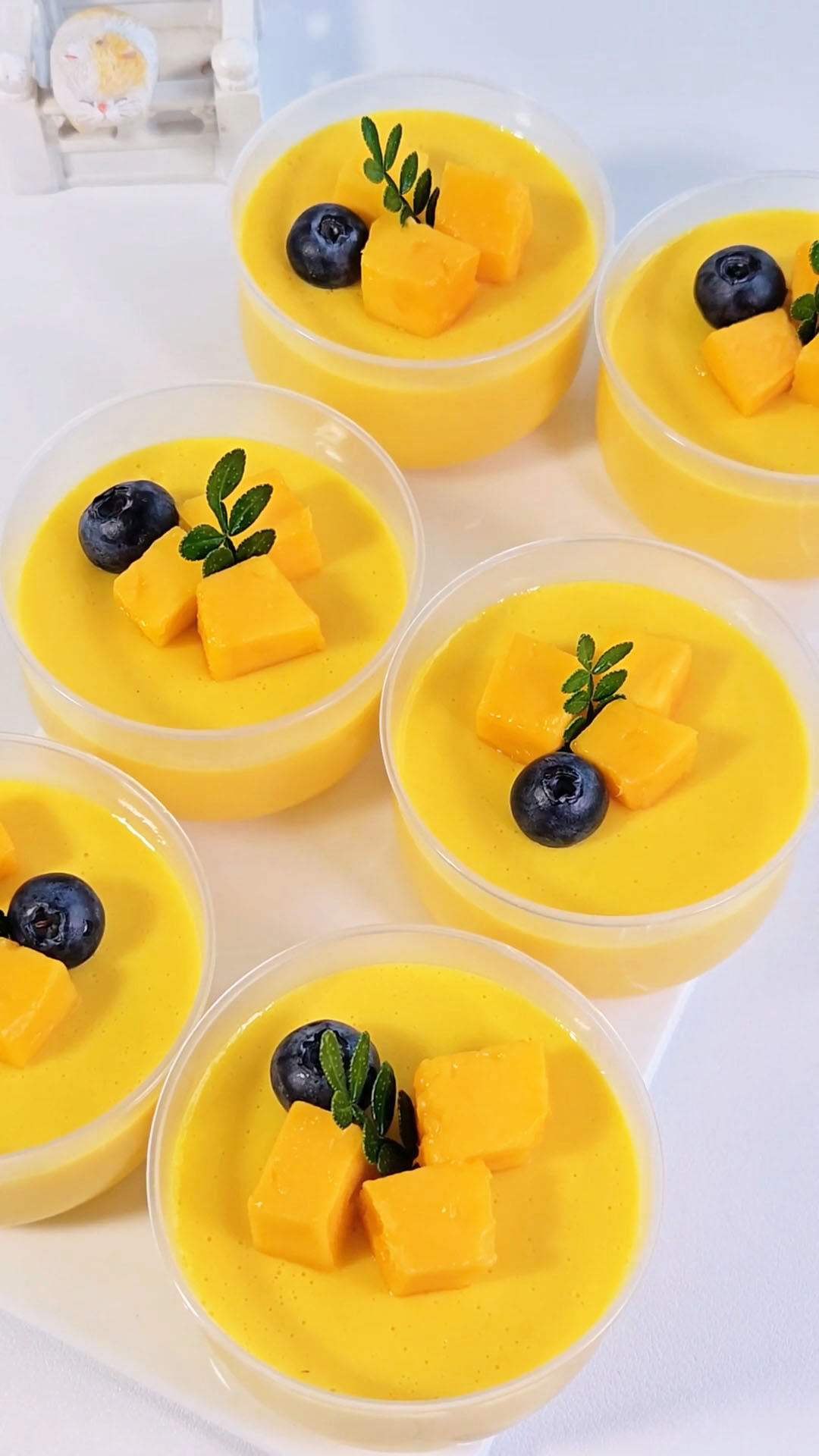
I have to say, mango season is the best—there are just so many amazing mango desserts you can make.
After sharing my Mango Mousse Cake and seeing how much you all loved it, I knew I had to make another mango treat.
As the weather gets warmer, this mango pudding is exactly what I’ve been craving—light, smooth, and so refreshing.
My little one absolutely loves this mango pudding. I have to admit, this is already the third time I’ve made it. Every time we finish it, I immediately get asked to make it again.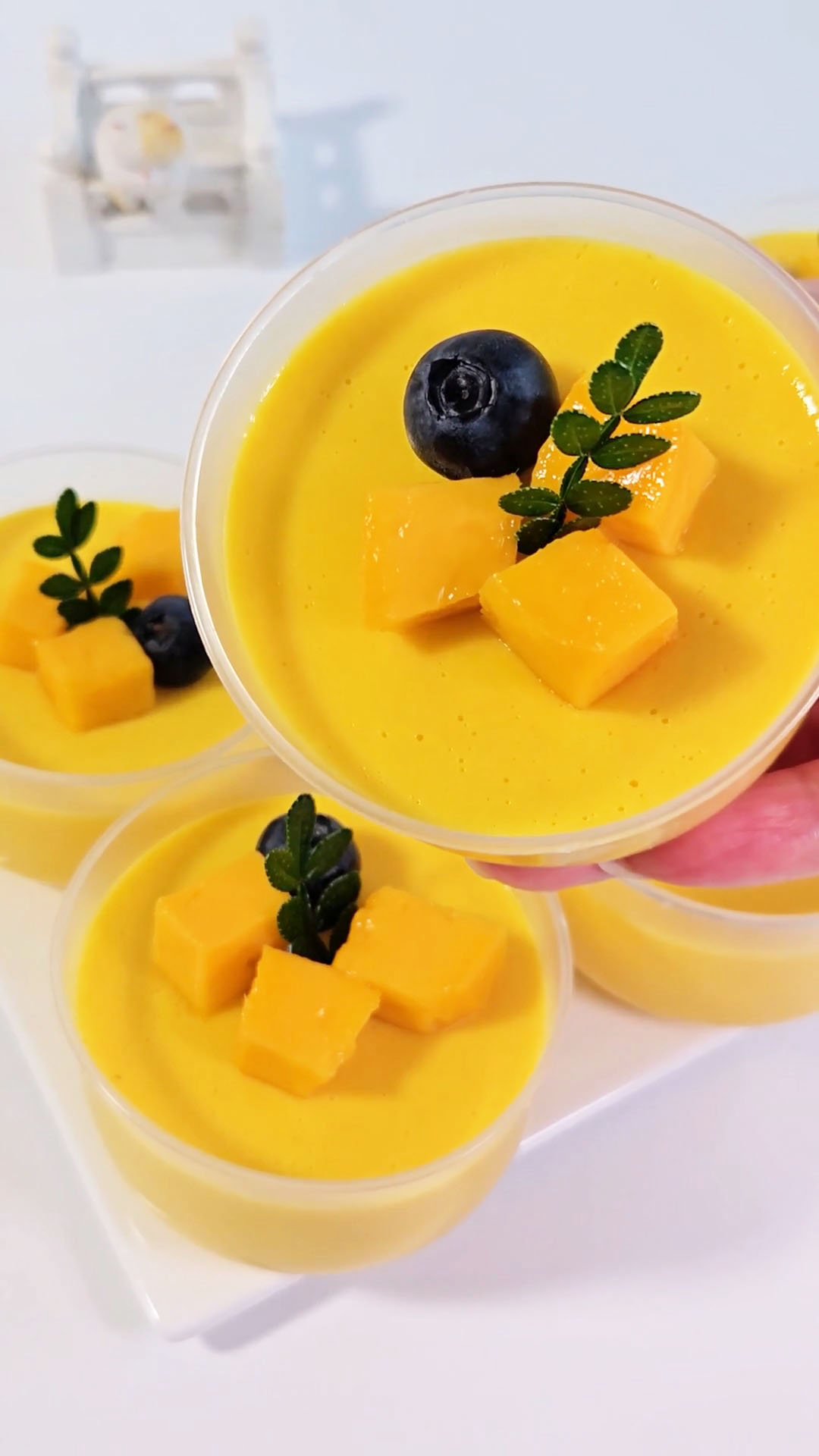
Why you’ll love this recipe
- This mango pudding is incredibly smooth and silky with no grainy texture.
- It’s full of real mango flavor, fresh, fruity, and naturally sweet.
- The texture is light and creamy, not too heavy or rich.
- It’s a no-bake dessert that’s easy to make with simple steps.
- Perfect for summer, refreshing and chilled straight from the fridge.
- Beginner-friendly and almost impossible to fail if you follow the tips.
Ingredients and substitutions
- Mango – Use fresh, ripe mangoes for the best natural sweetness and flavour. I always recommend choosing juicy, fragrant mangoes since they are the main flavour of this dessert.
- Milk – Used in two parts in this recipe. It helps create a smooth, creamy base and balances the richness of the cream while keeping the pudding light.
- Whole milk – Adds richness and creaminess to the pudding base. I recommend using full-fat milk for the best texture.
- Granulated sugar – Used to lightly sweeten the mixture and balance the natural tang of the mango. You can adjust the sweetness slightly to your taste.
- Heavy cream – This adds a creamy, silky mouthfeel and makes the pudding richer and smoother.
- Gelatin sheets – The key ingredient that helps the pudding set. Make sure to soak it properly in cold water so it dissolves evenly and gives that perfect soft set texture.
- Mango cubes, blueberries, mint leaves – These are for decoration. They add freshness, colour, and a little extra texture to the final dessert.
Ingredients
Mango Pudding Base
- 400 g mango flesh
- 200 g milk
- 120 g milk
- 15 g granulated sugar
- 80 g heavy cream
- 20 g gelatin sheets
Garnish
- Mango cubes
- Blueberries
- Mint leaves
How to Make Mango Pudding
- Make the mango milk mixture: Place 400 g mango flesh and 200 g milk into a blender. Blend on high speed until the mixture is completely smooth with no grains or fibrous bits. This mango milkshake mixture should be silky and uniform. Set it aside for now.
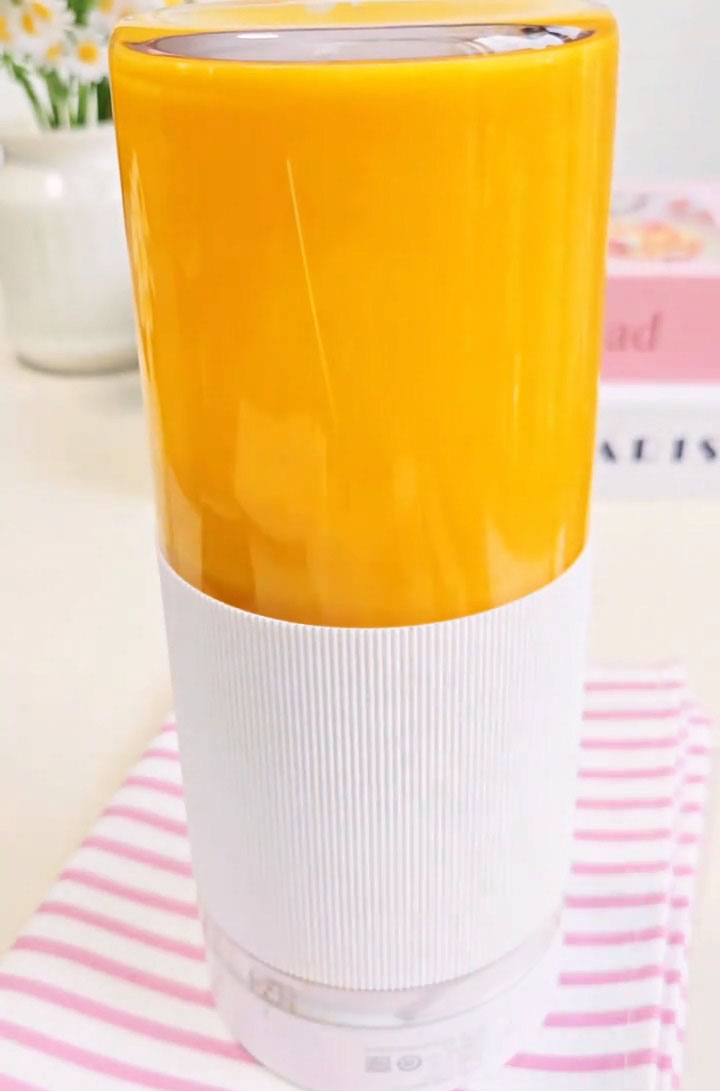
- Heat the cream mixture: In a small saucepan, combine 120 g milk, 15 g granulated sugar, and 80 g heavy cream. Place the saucepan over low heat and stir continuously with a whisk or spatula. Heat just until the sugar has completely dissolved. Do not let the mixture come to a boil. Once the sugar is dissolved, remove the saucepan from the heat immediately.
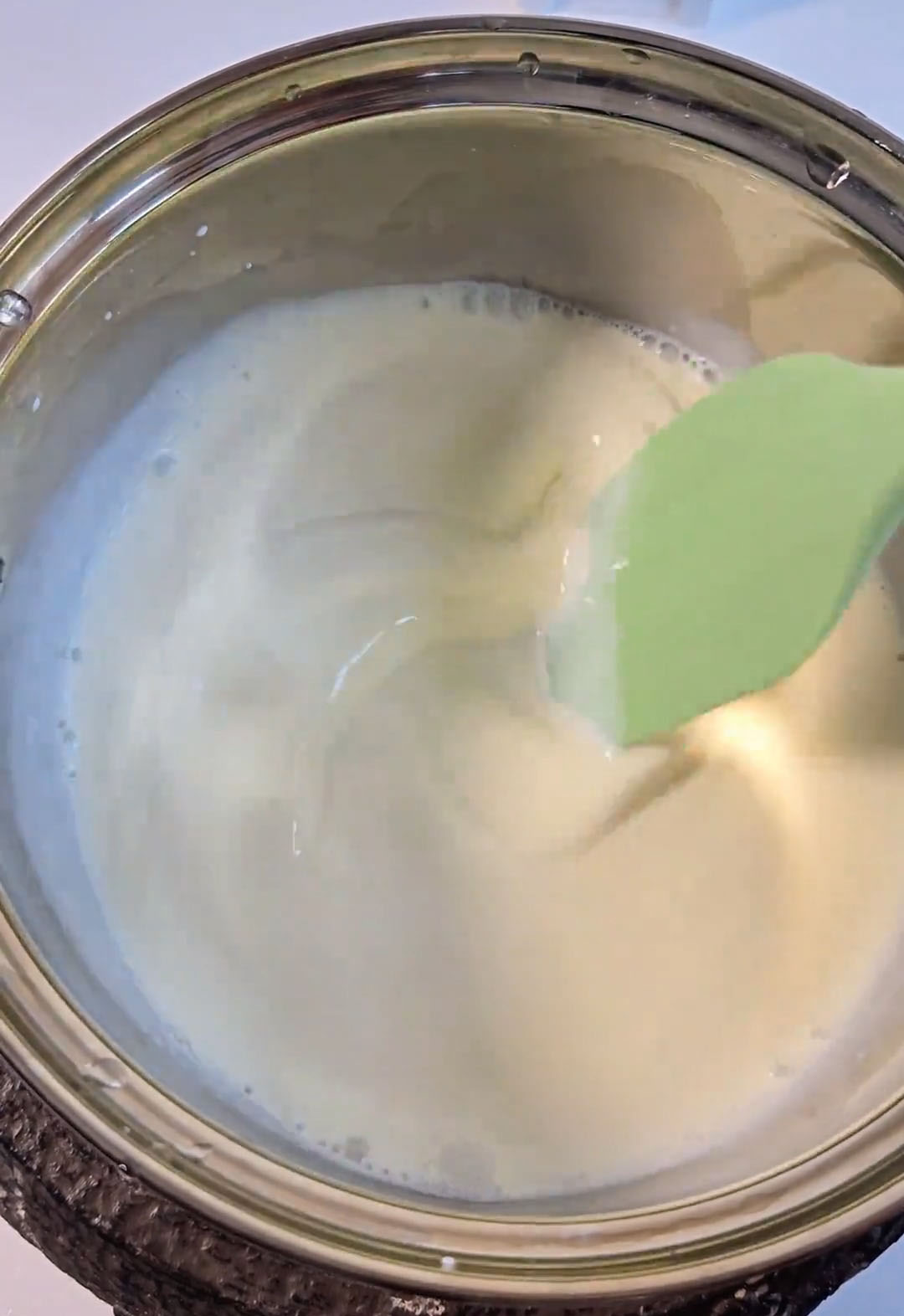
- Bloom and melt the gelatin: While the milk mixture is heating, place 20 g gelatin sheets in a bowl of cold water. Let them soak for 5–10 minutes until they are fully softened. Once the milk mixture is off the heat and still warm, remove the gelatin sheets from the water, squeeze firmly to remove any excess moisture, and add them to the warm milk mixture. Stir until the gelatin is completely dissolved and no visible pieces remain.
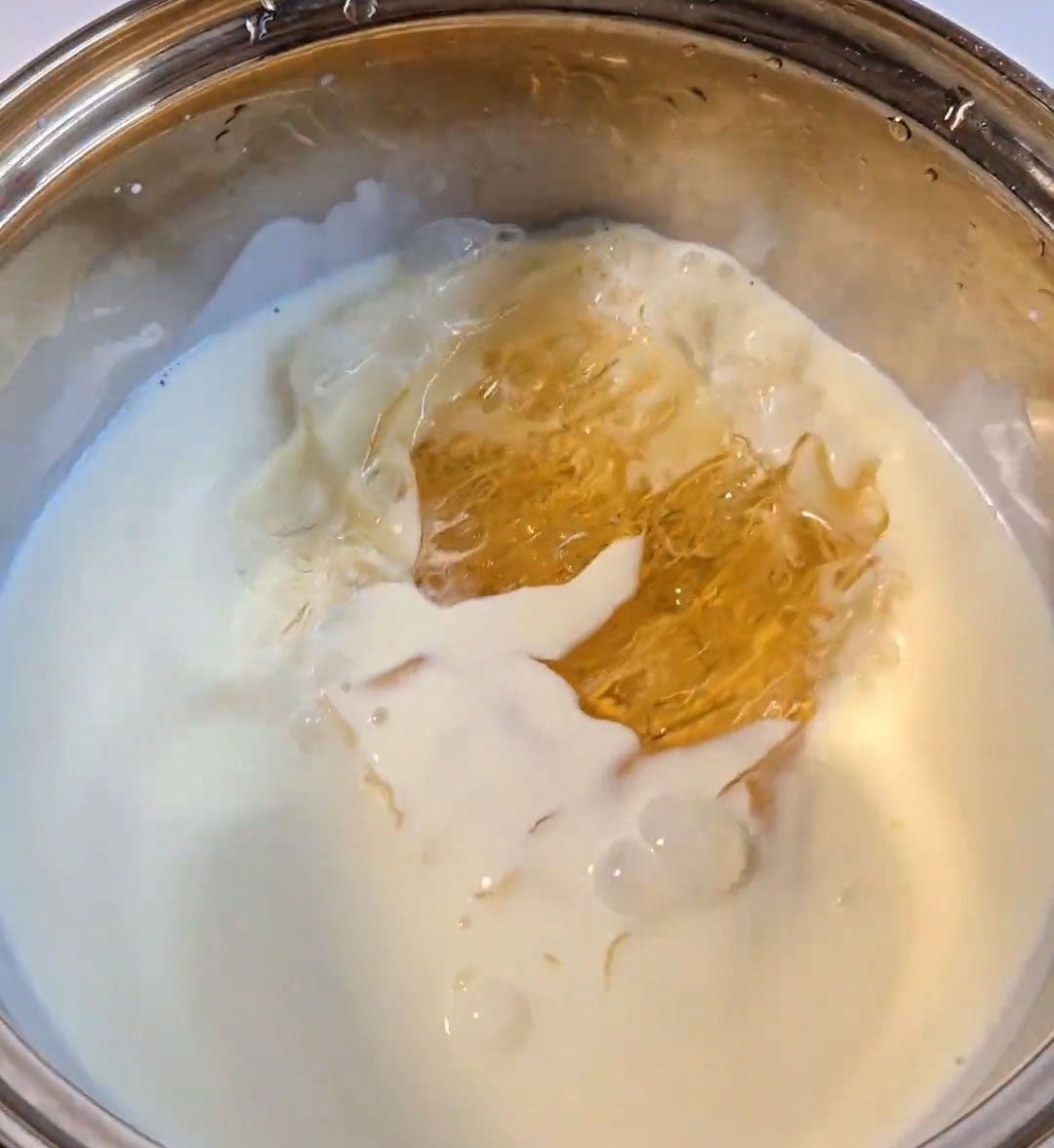
- Combine and strain: Pour the mango milk mixture from step 1 into the gelatin-milk mixture. Stir thoroughly to combine. Now, for the silkiest possible texture, strain the entire mixture through a fine-mesh sieve twice. This step removes any remaining pulp, foam, or undissolved particles, ensuring a flawlessly smooth, grain-free pudding.
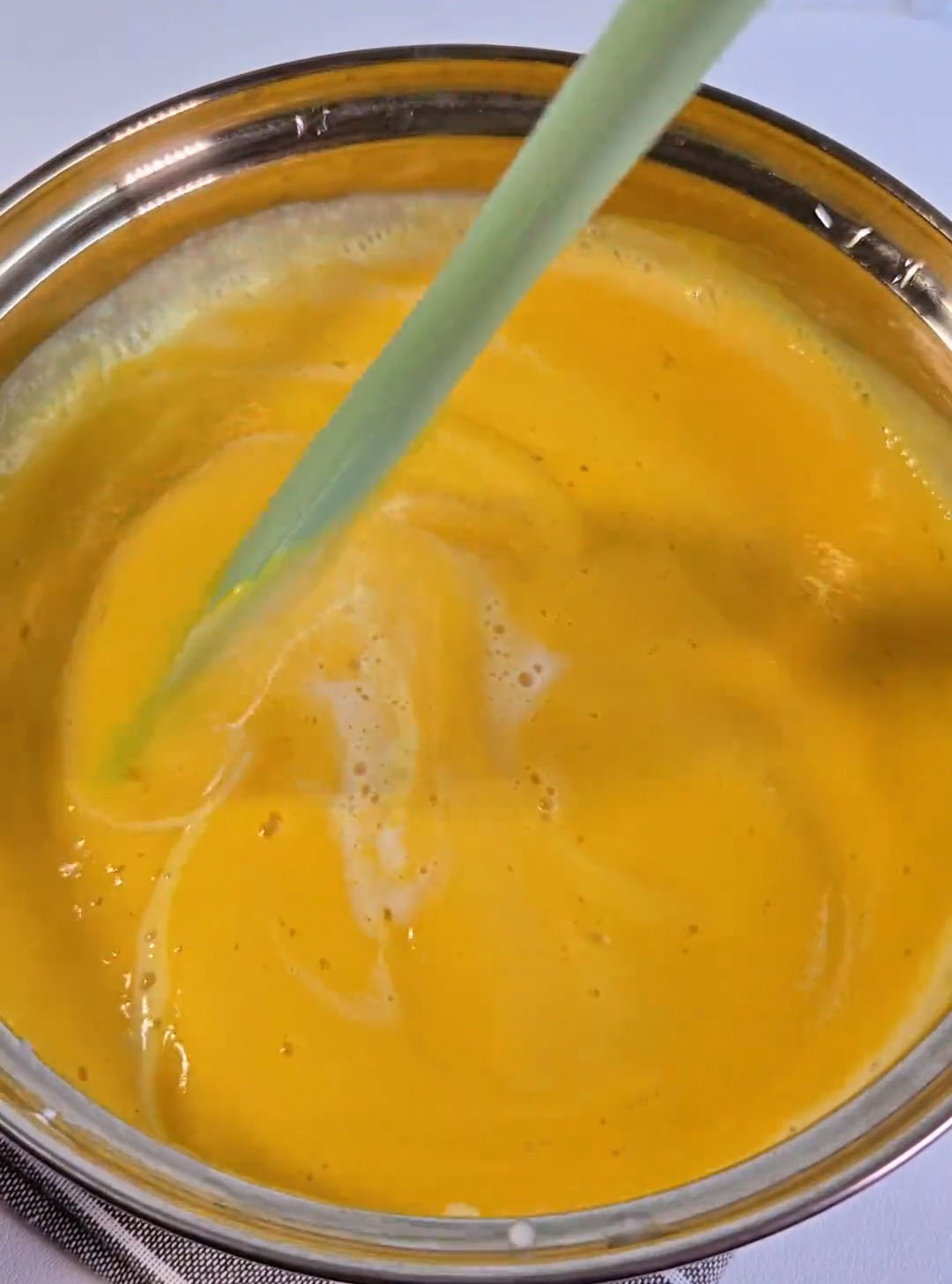
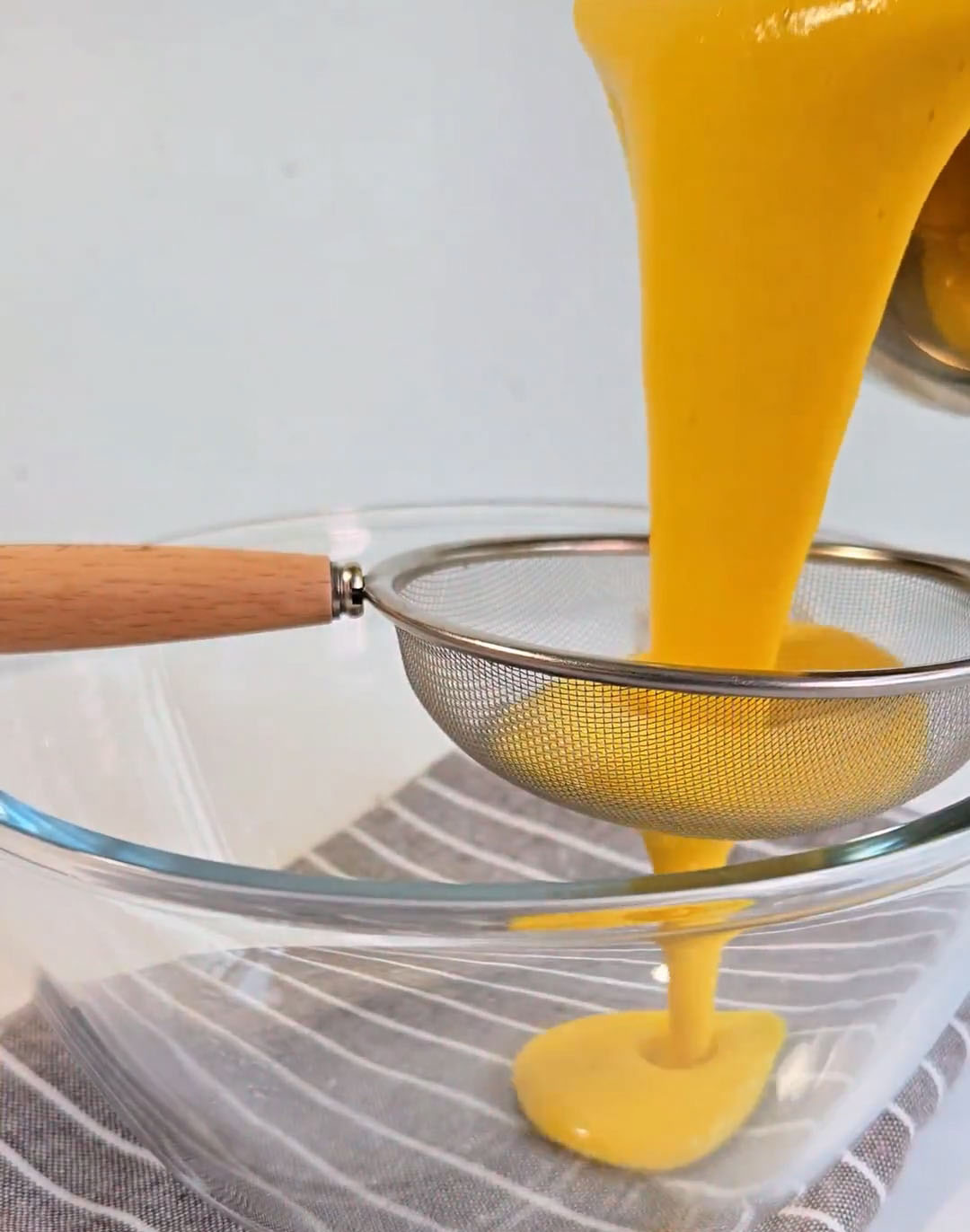
- Chill to set: Carefully pour the smooth mango pudding mixture into individual pudding cups, ramekins, or small bowls. Gently tap each cup on the counter to release any trapped air bubbles. Place the cups in the refrigerator and chill for at least 4 hours, or until completely firm and set.
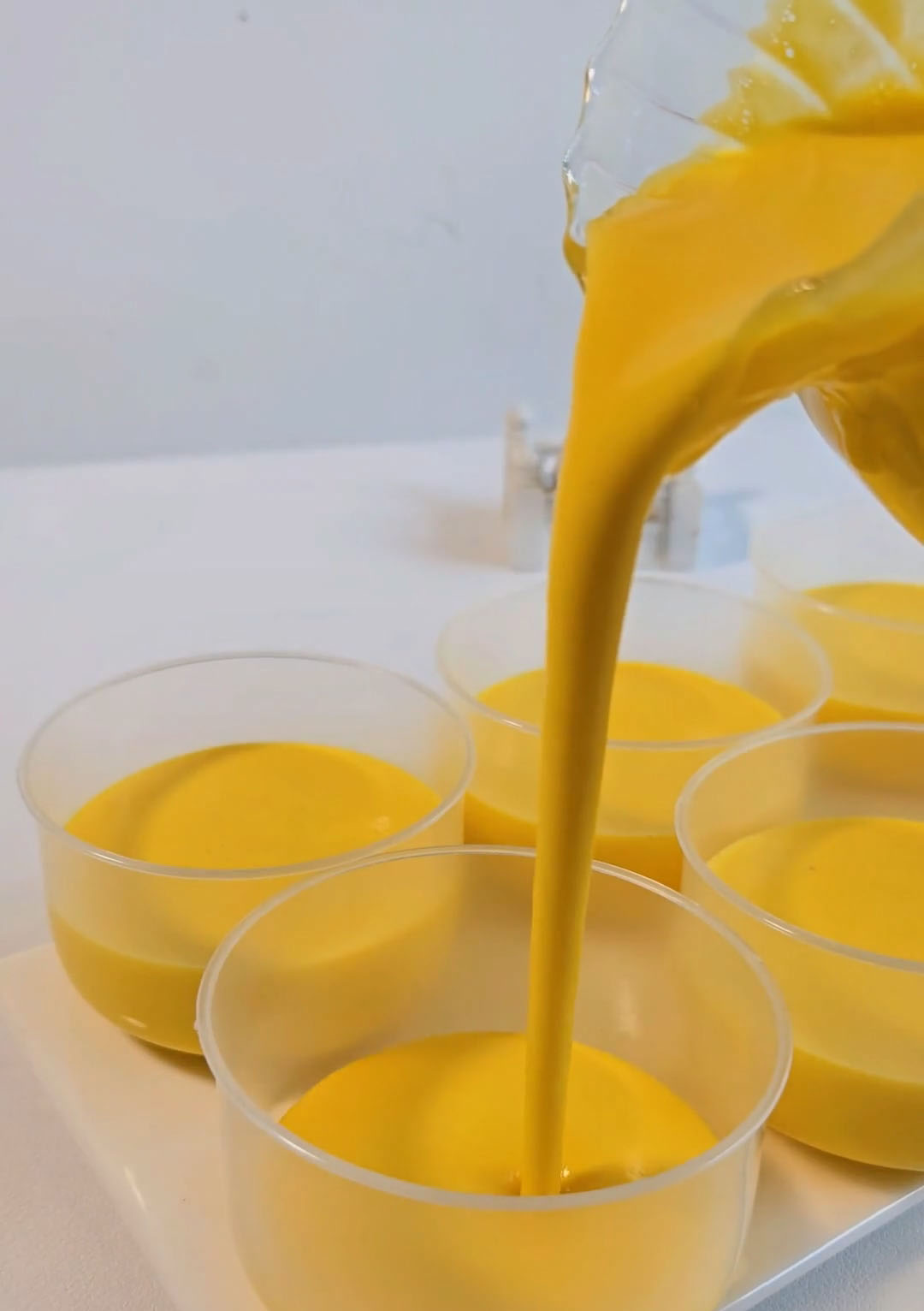
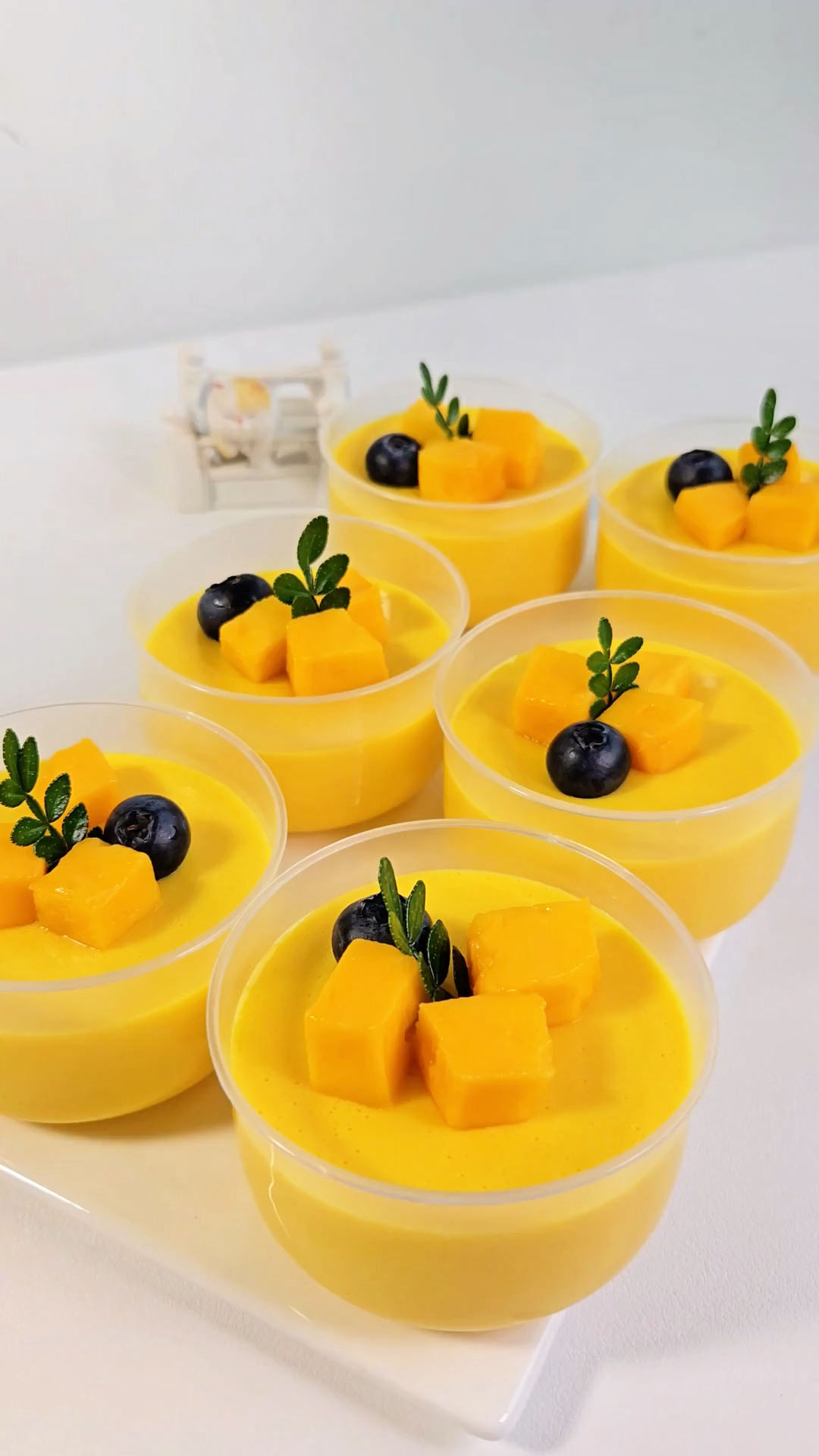
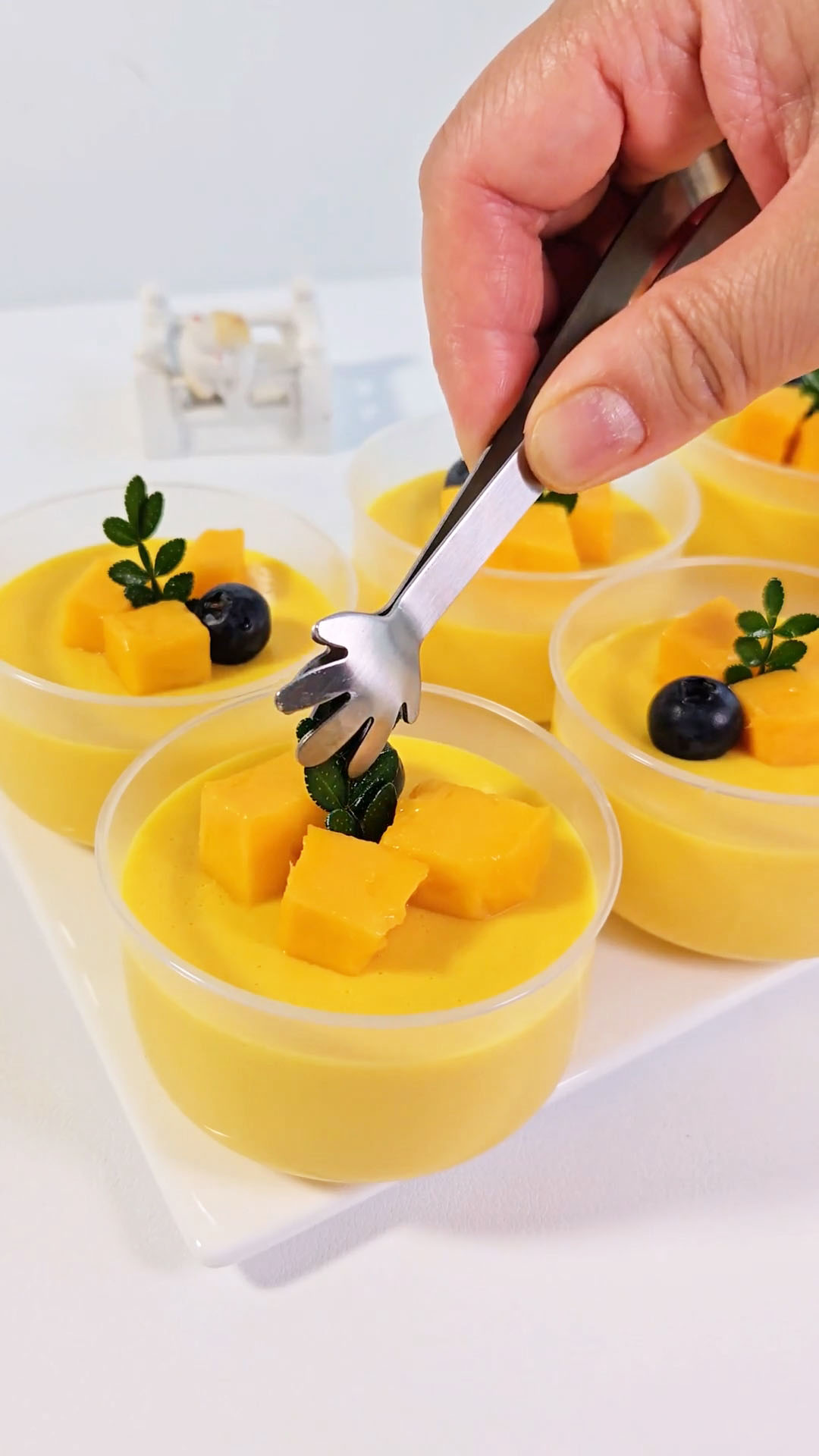
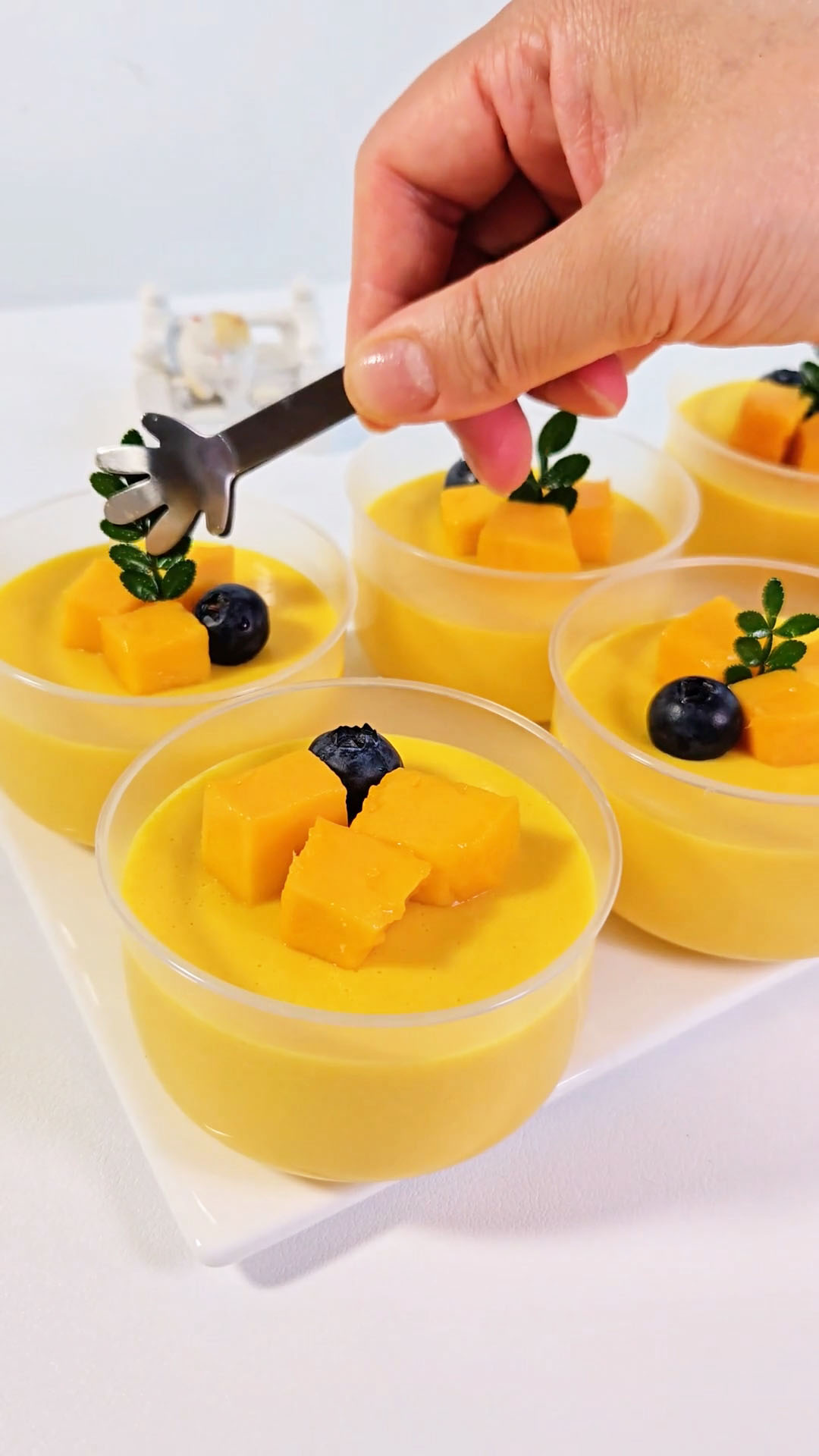
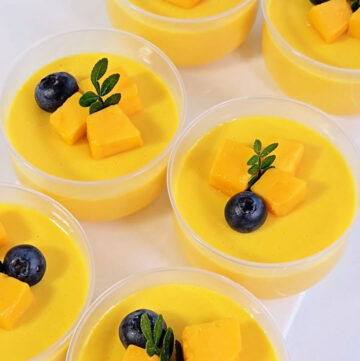
- Garnish and serve: Once the puddings are fully set, remove them from the refrigerator. Garnish the top of each pudding with fresh mango cubes, a few blueberries, and a small sprig of mint leaves for a vibrant, fresh finish. Serve chilled and enjoy.
Tips & Tricks
- Always use cold water for gelatin: This is one of the most important rules when working with gelatin. Always soak your gelatin sheets in cold water until they become soft and pliable. Never use hot water, as it will break down the gelatin’s protein structure and cause it to lose its setting ability, leaving you with a pudding that won’t firm up.
- Never boil the milk mixture: When heating the milk, sugar, and cream, keep the heat on low and remove the saucepan from the stove the moment the sugar dissolves. Boiling the mixture can create unwanted air bubbles and cause the proteins to denature, resulting in a pudding with a slightly tougher, less tender texture.
- Don’t skip the double strain: This step is the absolute secret to achieving that ultra-smooth, professional-quality texture. Straining twice removes any tiny lumps, mango fibres, or foam that could otherwise create a grainy texture. It may seem like a small step, but it makes all the difference between a good pudding and a great one.
- Adjust the sweetness to your liking: The recipe as written is designed to be lightly sweet, letting the natural flavour of ripe mangoes shine through. If you have a sweet tooth or your mangoes are on the tart side, feel free to increase the granulated sugar to 20–25g for a more pronounced sweetness.
- Use ripe, flavourful mangoes: Since mango is the dominant flavour here, using high-quality, ripe mangoes will yield the best results. Look for mangoes that yield slightly to gentle pressure and have a fragrant, sweet aroma. The sweetness and flavour of your mango will directly translate to your finished pudding.
Storage
Mango pudding can be stored covered in the refrigerator for up to 3 days. Keep the puddings covered with plastic wrap or in airtight containers to prevent them from absorbing any odours from the fridge and to maintain their smooth texture. For the best flavour and texture, I recommend enjoying them within the first 2 days.
Frequently Asked Questions
Why is my pudding not setting?
If your pudding hasn’t set after 4 hours, the most likely culprit is the gelatin. This can happen if the gelatin was added to a mixture that was too hot (which weakens its setting power) or if the gelatin wasn’t fully dissolved before the mixture was poured into cups. Another possibility is that the gelatin sheets were not properly bloomed in cold water. For best results, ensure your milk mixture is warm (not boiling) when adding the softened gelatin, and stir thoroughly until completely dissolved.
Why does my pudding have a grainy texture?
A grainy texture usually comes from skipping the straining step or not blending the mango enough. Blending the mango and milk until completely smooth is the first step to a silky pudding. The second, equally important step is straining the combined mixture through a fine-mesh sieve at least twice. This removes any remaining mango fibres, foam, or undissolved particles, guaranteeing a smooth, professional result.
Can I use powdered gelatin instead of sheets?
Yes, you can substitute powdered gelatin. The general rule is that 20g of gelatin sheets is equivalent to about 2 tablespoons (or 20g) of powdered gelatin. To use powdered gelatin, sprinkle it evenly over 4–5 tablespoons of cold water and let it sit for 5–10 minutes to bloom. Then, gently heat the bloomed gelatin (in the microwave for 10-second intervals or over a double boiler) until it becomes liquid, and stir it into your warm milk mixture until fully incorporated.
Why did my pudding develop a skin on top?
A skin forms when the pudding mixture is exposed to air while cooling in the refrigerator. To prevent this, place a piece of plastic wrap directly onto the surface of the warm pudding mixture before chilling. This creates a barrier that prevents air from drying out the top layer. If you prefer to skip this step, simply stir the pudding before serving if a skin has formed.
Can I make this into one large pudding instead of individual cups?
Absolutely! This recipe works perfectly in a single larger dish or bowl. Just note that a larger volume will take slightly longer to set thoroughly—closer to 6 hours or overnight. Once set, you can scoop it out into bowls for serving, or present it at the table as a shareable dessert.
Mango Pudding (Ultra Smooth & Creamy No-Bake Dessert!)
Ingredients
Mango Pudding Base
- 400 g mango flesh
- 200 g milk
- 120 g pure milk
- 15 g granulated sugar
- 80 g heavy cream
- 20 g gelatin sheets
Garnish
- Mango cubes
- Blueberries
- Mint leaves
Instructions
- Make the mango milk mixture: Place 400 g mango flesh and 200 g milk into a blender. Blend on high speed until the mixture is completely smooth with no grains or fibrous bits. This mango milkshake mixture should be silky and uniform. Set it aside for now.
- Heat the cream mixture: In a small saucepan, combine 120 g pure milk, 15 g granulated sugar, and 80 g heavy cream. Place the saucepan over low heat and stir continuously with a whisk or spatula. Heat just until the sugar has completely dissolved. Do not let the mixture come to a boil. Once the sugar is dissolved, remove the saucepan from the heat immediately.
- Bloom and melt the gelatin: While the milk mixture is heating, place 20 g gelatin sheets in a bowl of cold water. Let them soak for 5–10 minutes until they are fully softened. Once the milk mixture is off the heat and still warm, remove the gelatin sheets from the water, squeeze firmly to remove any excess moisture, and add them to the warm milk mixture. Stir until the gelatin is completely dissolved and no visible pieces remain.
- Combine and strain: Pour the mango milk mixture from step 1 into the gelatin-milk mixture. Stir thoroughly to combine. Now, for the silkiest possible texture, strain the entire mixture through a fine-mesh sieve twice. This step removes any remaining pulp, foam, or undissolved particles, ensuring a flawlessly smooth, grain-free pudding.
- Chill to set: Carefully pour the smooth mango pudding mixture into individual pudding cups, ramekins, or small bowls. Gently tap each cup on the counter to release any trapped air bubbles. Place the cups in the refrigerator and chill for at least 4 hours, or until completely firm and set.
- Garnish and serve: Once the puddings are fully set, remove them from the refrigerator. Garnish the top of each pudding with fresh mango cubes, a few blueberries, and a small sprig of mint leaves for a vibrant, fresh finish. Serve chilled and enjoy.
Leave a Reply